How To Tell If Hydrostatic Transmission Is Bad? [5 Sign + Fixes!]

A hydrostatic transmission rarely fails without warning. Long before total failure, it shows clear symptoms, loss of power, overheating, noise, or inconsistent movement. The key is knowing which signs mean temporary issues and which indicate internal damage.
This guide helps you determine whether your hydrostatic transmission is actually bad, or just needs service.
First: What “Bad” Really Means
A hydrostatic transmission is considered bad when:
- It cannot maintain hydraulic pressure
- Internal components are worn or damaged
- Performance does not improve after proper oil service and air purging
Many symptoms people assume are “failure” are actually caused by dirty oil, trapped air, overheating, or external issues.
These symptoms indicate that something is wrong with the hydrostatic transmission. To fix a bad hydrostatic transmission, you need to check the oil level and refill it as required. Purging the hydraulic system is also important. Depending on the condition of the belts or hoses, you need to replace the cracked ones.
This may sound like losing the trail in a desert, but I will guide you throughout the process. I have worked on hydrostatic transmissions for a long time, so I can tell you the detailed symptoms and their solutions.
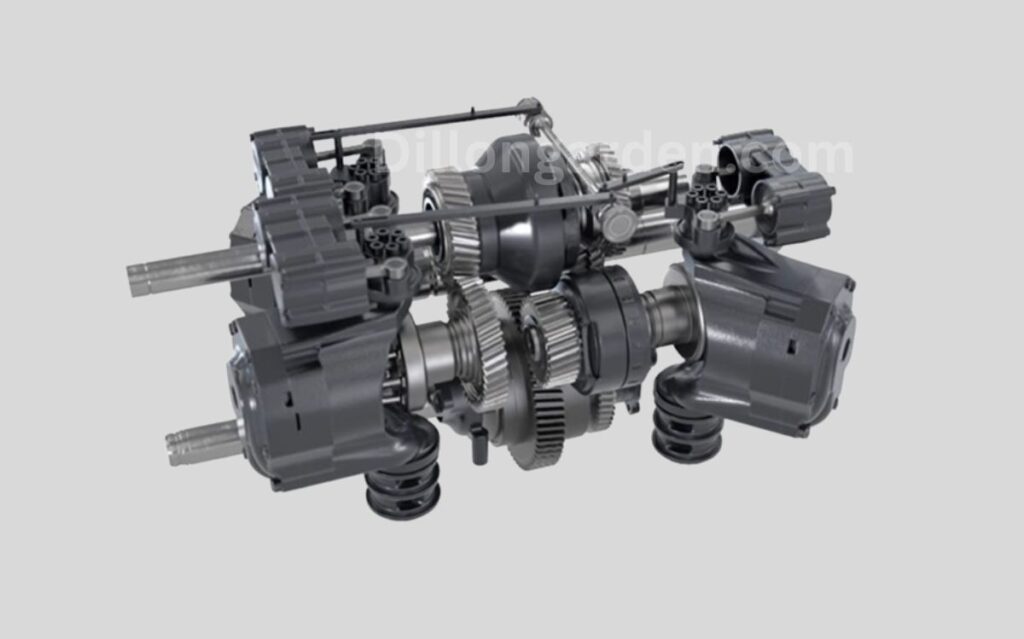
Bad Hydrostatic Transmission Symptoms Chart
Check the following chart to know what can potentially go wrong when you see these symptoms.
| Symptoms | Reasons |
| The mower/tractor will lose power, and you may hear noise from it | Hydraulic fluid is low or contaminated. |
| Air has entered the system. | |
| The transmission won’t engage, or the mower won’t move | Hydraulic fluid is low or dirty. |
| Air has entered the system. | |
| The drive belt is cracked. | |
| Hydraulic hoses are leaking. | |
| The mower will wander to the sides | Hydraulic oil can’t reach one side. |
| You will see leaking hydraulic oil | Hydraulic hoses or seals are cracked. |
| Hydraulic oil will be too hot | Hydraulic oil is too low. |
As you can see, different symptoms can indicate the same problem. I will focus on detailed symptoms and reasons without repeating anything.
How to Tell If Hydrostatic Transmission Is Bad? 5 sign with fixes
Learn how the above reasons cause the respective symptoms and how to react to these symptoms.
1. The Mower Will Lose Power
This is probably the most common problem with hydrostatic transmissions. It has two main reasons.
- If the hydraulic oil level is low, the system will lose pressure. As a result, the mower will feel weaker than usual, and the speed will be reduced.
- Air can get trapped inside if there are cracks in the hoses or seals. It is called captivation. Due to the trapped air, the system pressure will drop, and the mower will be slower.
How To Fix?
- You can do two things. The first thing is checking the oil level and topping it off. Remove the hydraulic oil reservoir cap and add fresh oil to the reservoir.
- If the problem persists, turn the mower off and disengage the transmission after lifting the rear end. Put the speed control lever in the slow position and the direction control lever to neutral.
- Then, push the second lever forward and hold it there for a few seconds. Pull it in reverse and hold it there too.
- Keep moving the lever forward and backward several times. It will purge the air from the system.
Pro Tip
- Always choke the mower’s/tractor’s front wheels before troubleshooting.
2. The Transmission Won’t Engage
It can happen for four reasons. I have already discussed low hydraulic fluid and cavitation, so let’s focus on the other two.
- The drive belt transfers power from the engine to the transmission. If the belt is worn or cracked, it won’t deliver enough power to the transmission. And the transmission will not engage.
- As hydraulic hoses work under extreme pressure, getting loose or cracked is a common incident. Especially if the hoses are at the end of their service life, cracks can happen often. Due to the cracks, hydraulic oil will leak from the transmission.
How To Fix?
- Check the drive belt condition. If it is too worn or cracked, you need to replace the belt. Turn the mower off and remove the deck belt first. Then, remove the drive belt from the engine pulley and the pump pulley.
- Install the new drive belt. Attach the deck belt after that. The transmission should engage now.
- If it doesn’t, check the hydraulic hoses for leaks or cracks. Tighten the hoses if possible. Otherwise, drain the hydraulic oil first by removing the drain nut under the reservoir. Then, replace the hoses and seals.
3. The Mower Will Wander to the Sides
If the hydraulic oil from the pump doesn’t reach both ends of the drive axle, one side will lose power. This can happen if the hydraulic lines are faulty on one side. In that case, the other side will get more power and wander to the side which has low power.
How To Fix?
- Checking the hydraulic lines is the only solution. I provided the steps for checking the hydraulic lines in the previous section. Please refer to that solution.
Advice
- If the mower/tractor is under warranty, it is better to contact the dealership.
4. Leaking Hydraulic Oil
The reason is obvious here. When the hydraulic seals or hoses crack or wear, the hydraulic oil will leak. If the cracks are large, you may see larger spills. Otherwise, the cracked parts may have light oil marks.
How To Fix?
- Check if the hose connections are loose. If so, you can try to tighten the hoses.
- If there are cracks in the hose, you should replace the bad hose.
Note
- Always drain hydraulic oil before replacing the hoses.
5. Hydraulic Oil Is Too Hot
When the hydraulic oil level drops too much, the system components face increased friction. As a result, the components become much hotter. At the same time, the oil also becomes hot.
You will notice that the hoses are very hot to the touch, and this is a symptom that the transmission can’t work properly.
How To Fix?
- Check the hydraulic oil level in the reservoir. The reservoir is under the seat. It has a transparent wall so that you can see the oil level from the outside. The oil level should be close to the top.
- Refill the reservoir with the right type of hydraulic oil. You should use 20W-50 or 15W-50, depending on what the manufacturer suggests.
Note
- If the remaining oil is too old or dirty, you need to drain it before refilling the oil.
Checking this video can help you:
Signs the Transmission Is NOT Bad (Yet)
These issues often mimic failure but are repairable:
- Air in the system (after storage or oil change)
- Dirty or incorrect oil
- Overheating from blocked cooling fins
- Slipping drive belt
- Low oil level
- Bypass valve left open
Always rule these out before declaring the transmission bad.
Simple Tests to Confirm Hydrostatic Condition
Test 1: Cold vs Hot Performance
- Works cold, fails hot → internal wear likely
Test 2: Purge Test
- Purge air properly
- If performance improves significantly → air was the problem
Test 3: Oil Inspection
- Burnt smell or metal flakes → serious internal damage
Test 4: Load Test
- Struggles under minimal load → pressure loss
When a Hydrostatic Transmission Is Truly “Bad”
A transmission is likely beyond repair when:
- No movement after oil change and purging
- Metal debris is present
- Severe overheating occurs repeatedly
- Performance does not improve with cooling
- Loud internal noise persists
At this point, replacement is usually more cost-effective than repair, especially on residential equipment.
Can a Bad Hydrostatic Transmission Be Fixed?
Sometimes:
- Commercial units may be rebuildable
- Minor internal wear may still function with fresh oil (short term)
Usually not:
- Most residential hydrostatic transmissions are sealed
- Internal parts are not serviceable individually
Preventive Tips to Avoid Hydrostatic Failure
- Keep cooling fins and fans clean
- Use correct oil only
- Change oil if serviceable
- Avoid continuous heavy loads
- Purge system after storage
- Fix leaks immediately
Most hydrostatic failures are caused by heat, dirty oil, or neglect, not sudden defects.
FAQs – Hydrostatic Transmission Diagnosis
How long do hydrostatic transmissions last?
With proper care, many last 1,000–1,500 hours. Neglect can shorten life dramatically.
Can low oil cause permanent damage?
Yes. Running low oil causes overheating and internal scoring very quickly.
Does overheating permanently damage a hydrostatic transmission?
Repeated overheating does. One brief incident may not, but ongoing heat damage is cumulative.
Is whining always bad?
Light whining is normal. Loud, worsening noise under load is not.
Final Verdict
A hydrostatic transmission doesn’t “suddenly fail.” It gives clear, repeatable warning signs, loss of power when hot, noise, weak movement, and oil contamination. Diagnosing it correctly prevents unnecessary replacement and helps you decide when repair is no longer worth it.