12 Front Yard Landscaping Ideas to Enhance Curb Appeal and Functionality

Landscaping a front yard can significantly impact a home’s overall appearance and curb appeal. Many homeowners look for practical and attractive ways to enhance their outdoor space, balancing aesthetics with functionality.

The right front yard landscaping not only boosts visual appeal but also adds value and usability to the property. This article explores a variety of ideas to inspire thoughtful and effective improvements for different yard sizes and styles.
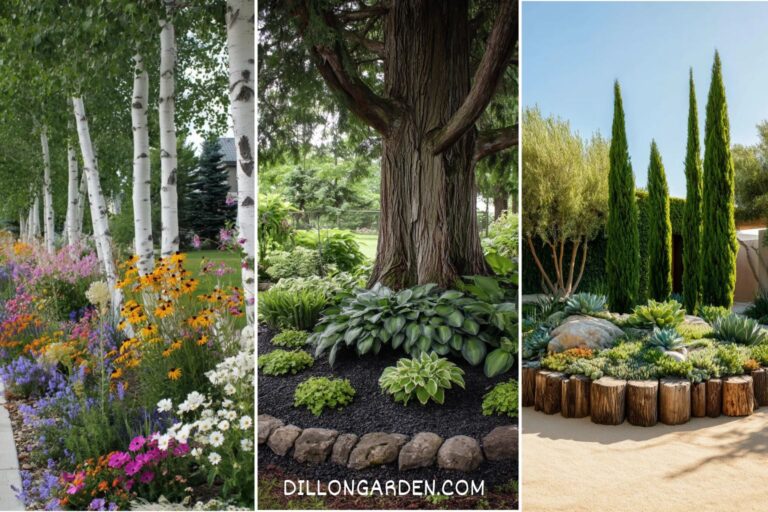
1) Install raised garden beds for better soil control and neat appearance

Raised garden beds allow for improved soil management by keeping soil loose and well-drained. This prevents waterlogging and promotes healthy plant roots.
They create a defined, organized look in the front yard, enhancing curb appeal. Raised beds also help keep weeds and pests more contained and manageable.
Using durable materials can further improve the bed’s durability and fit the overall landscape style. For more ideas, see raised garden bed recommendations from Southern Living.
2) Use evergreens like boxwood for year-round color and structure

Evergreens such as boxwood provide consistent green foliage throughout all seasons. They offer a strong structural element to front yards, maintaining shape without heavy maintenance. Their dense growth works well for hedges, borders, or low walls, adding subtle definition to landscape design. Choosing boxwood or similar shrubs ensures color and form even in winter. For more options, alternatives like yew may be suitable boxwood alternatives.
3) Plant hellebores for early spring blooms with low maintenance
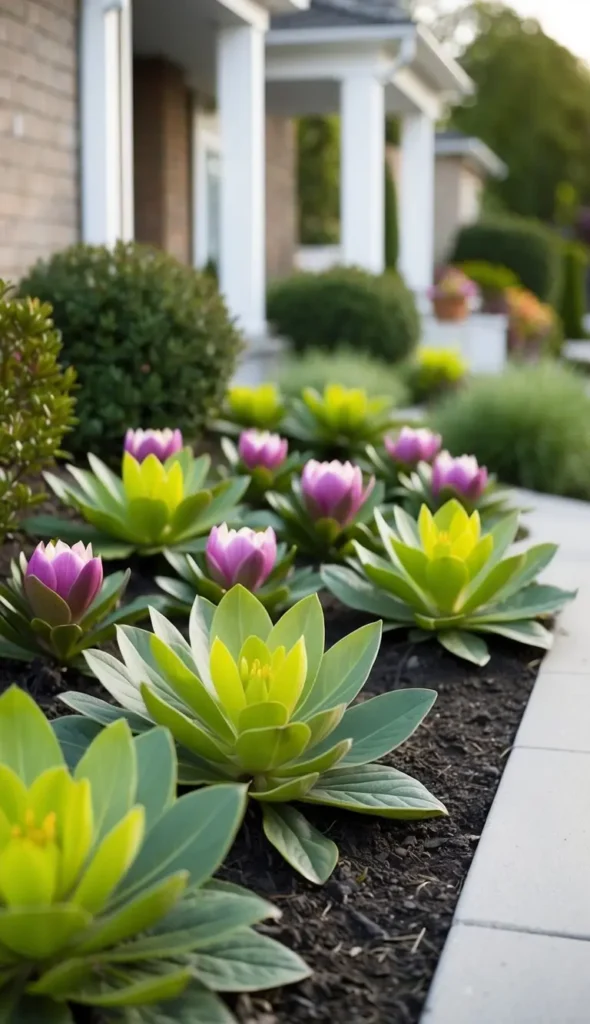
Hellebores bloom in late winter to early spring, providing early color when few other plants do. They grow best in partial shade with well-drained, nutrient-rich soil.
Once established, hellebores require little care and tolerate a range of soil types. Their evergreen foliage adds year-round interest to the front yard. Learn more about planting hellebores for early blooms with low maintenance here.
4) Add a trellis with climbing roses or clematis for vertical interest
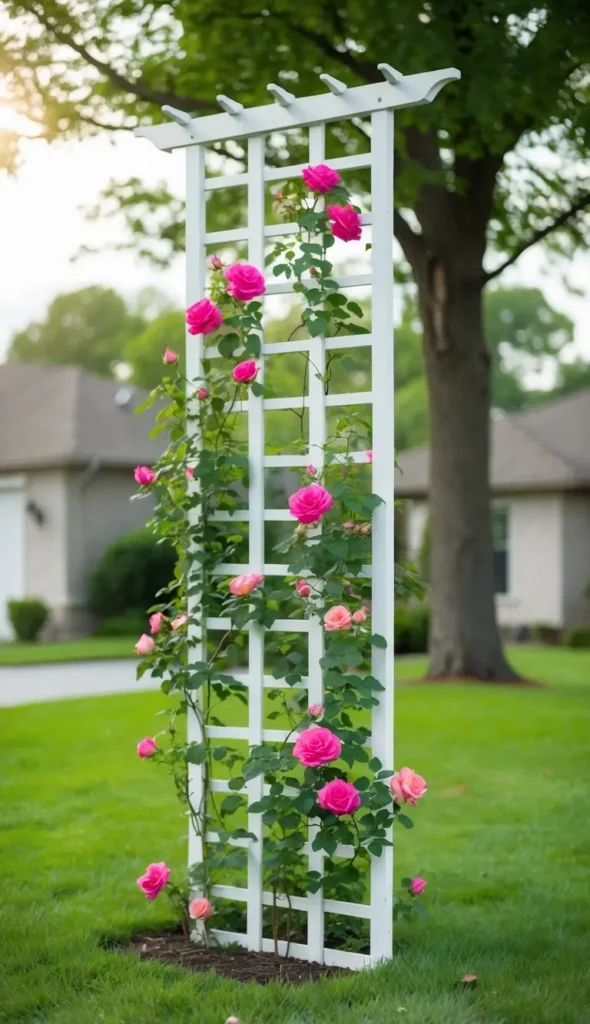
A trellis supports climbing roses or clematis, adding height and texture to the front yard. These plants create a natural focal point without taking much ground space.
Clematis varieties work well on compact trellises, suitable for smaller gardens. Climbing roses provide seasonal blooms and can enhance curb appeal.
Using a trellis with these plants also helps define garden areas and can offer some privacy. For more ideas on using trellises, see this garden trellis guide.
5) Create a focal point using a small water fountain or birdbath
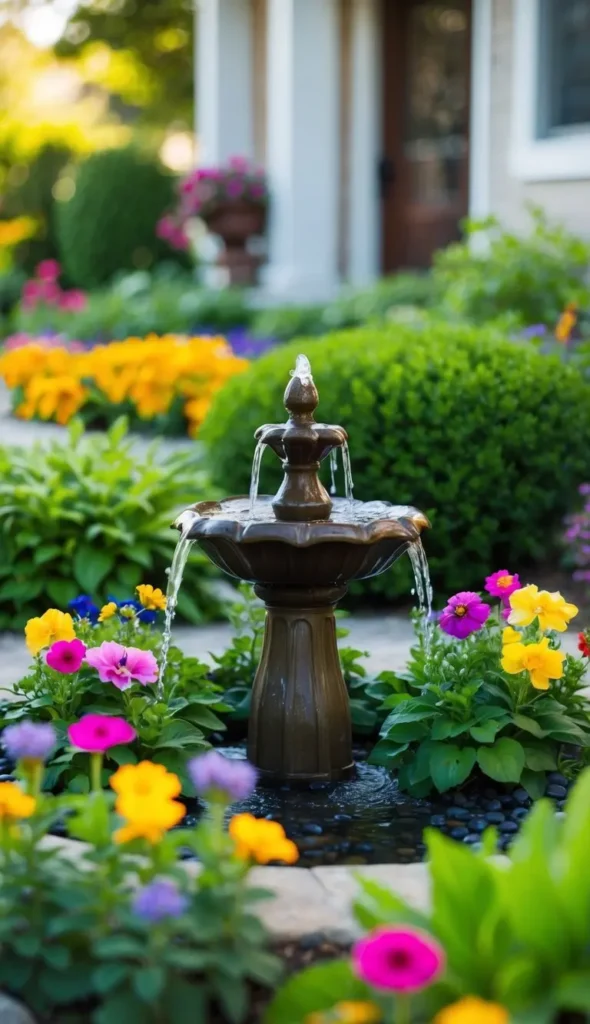
A small water fountain adds movement and sound, drawing attention in a subtle way. It works well as a central element in a compact front yard.
A birdbath can serve as both a decorative piece and a way to attract wildlife. Its presence provides visual interest without overwhelming limited space.
Choosing a classic tiered fountain or a simple birdbath helps create a balanced, inviting atmosphere. For design ideas, see small front yard water fountain options.
6) Incorporate native pollinator plants such as bee balm and coneflowers
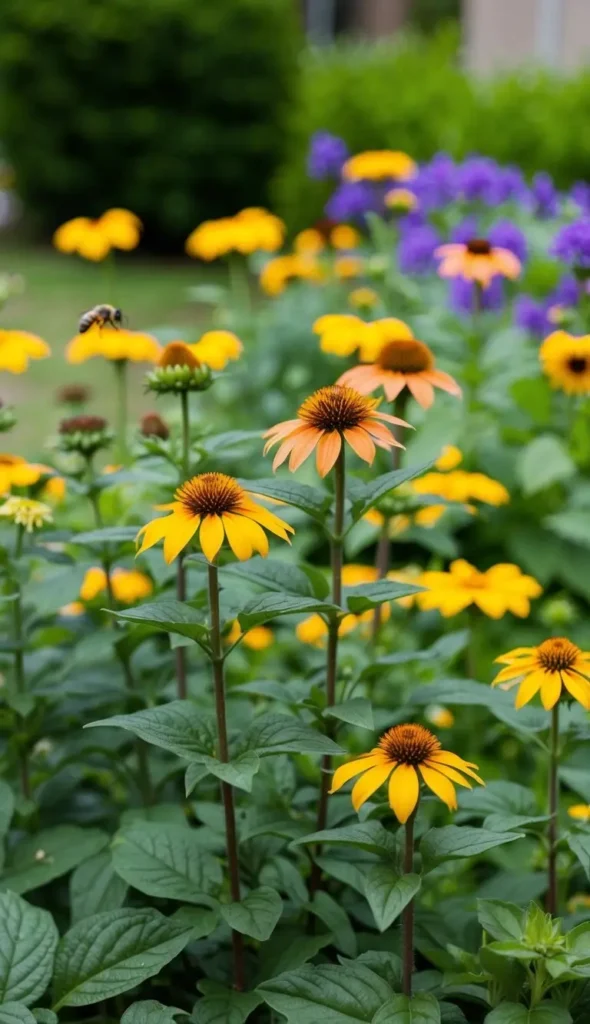
Native pollinator plants like bee balm and coneflowers provide essential nectar and pollen for bees and butterflies. They also adapt well to local growing conditions, making them low-maintenance choices.
Planting these species supports pollinator populations and enhances front yard biodiversity. Reliable options include bee balm’s tubular flowers and coneflowers’ vibrant blooms, which attract a variety of pollinators throughout the season. See examples of effective pollinator plants for gardens here.
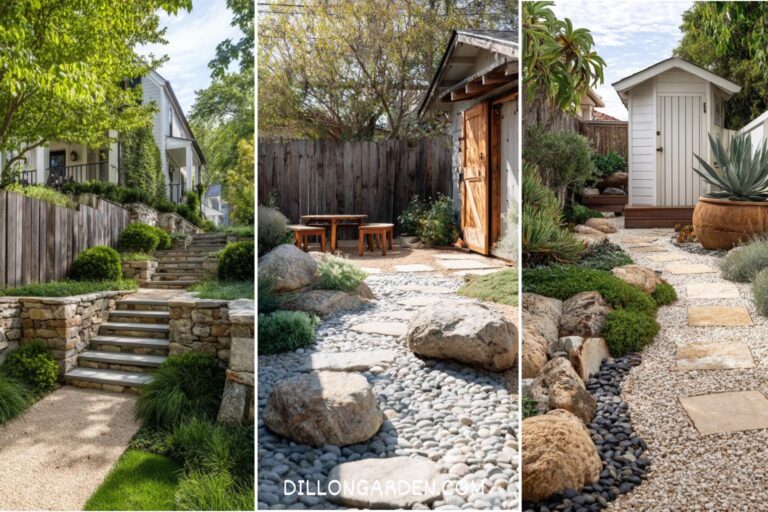
7) Design pathways with natural stone or pavers leading to the entrance

Pathways made from natural stone or pavers create a clear, inviting route to the front door. They offer durability and can complement various house styles. Using materials like slate or large un-honed stones adds texture and visual interest. Installing stones diagonally can make the path appear wider, enhancing the entrance’s appeal. More ideas can be found on walkway paver designs.
8) Include berry-producing shrubs like hollies or serviceberry for seasonal interest
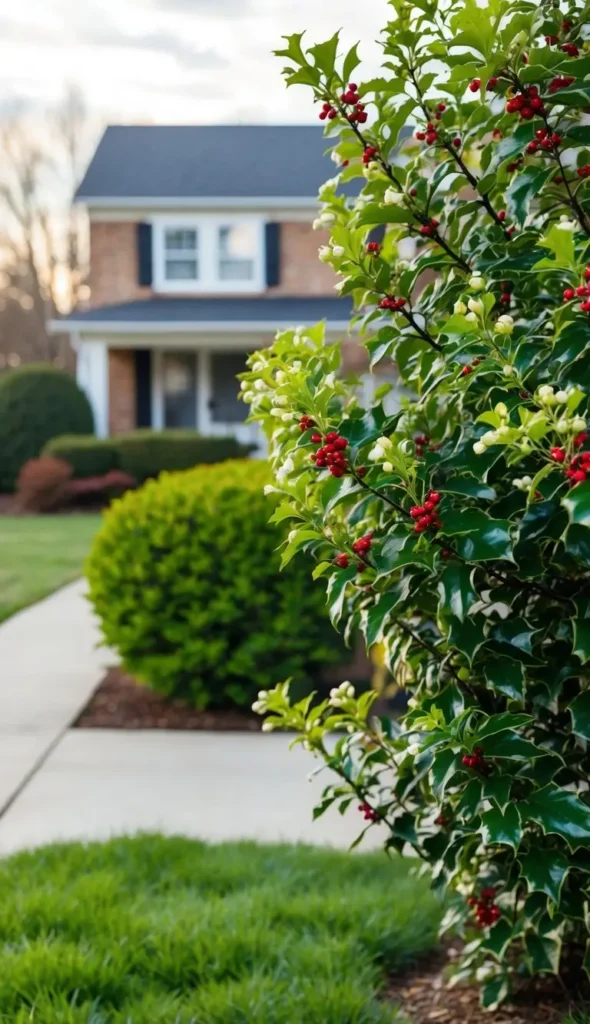
Berry-producing shrubs add color and texture throughout the year. Hollies offer glossy foliage and bright red berries that persist into winter.
Serviceberry is valued for spring blooms and summer fruit, plus attractive fall color. These shrubs support wildlife and enhance curb appeal. More details about serviceberry species are available at 9 Types of Serviceberry Trees and Shrubs for Your Yard.
9) Use xeriscaping techniques with drought-tolerant plants to conserve water
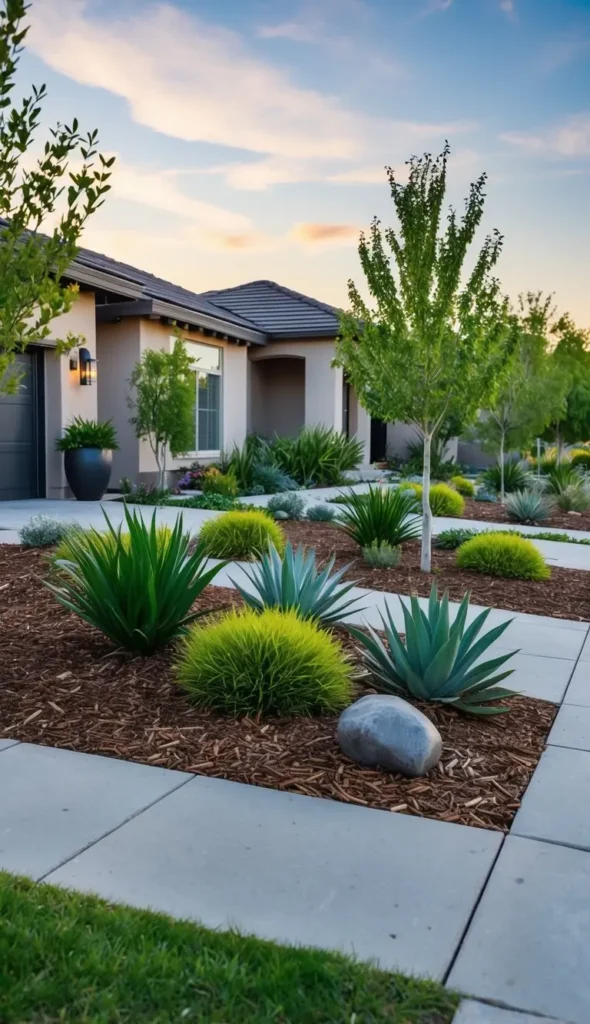
Xeriscaping focuses on choosing plants that thrive with minimal water. It reduces the need for irrigation by selecting drought-resistant species suited to the local climate.
This method conserves water while maintaining an attractive front yard. Proper soil preparation and mulching also help retain moisture and reduce evaporation. More on effective xeriscaping techniques can be found at Better Homes & Gardens.
10) Introduce tiered planters for dynamic and space-saving planting
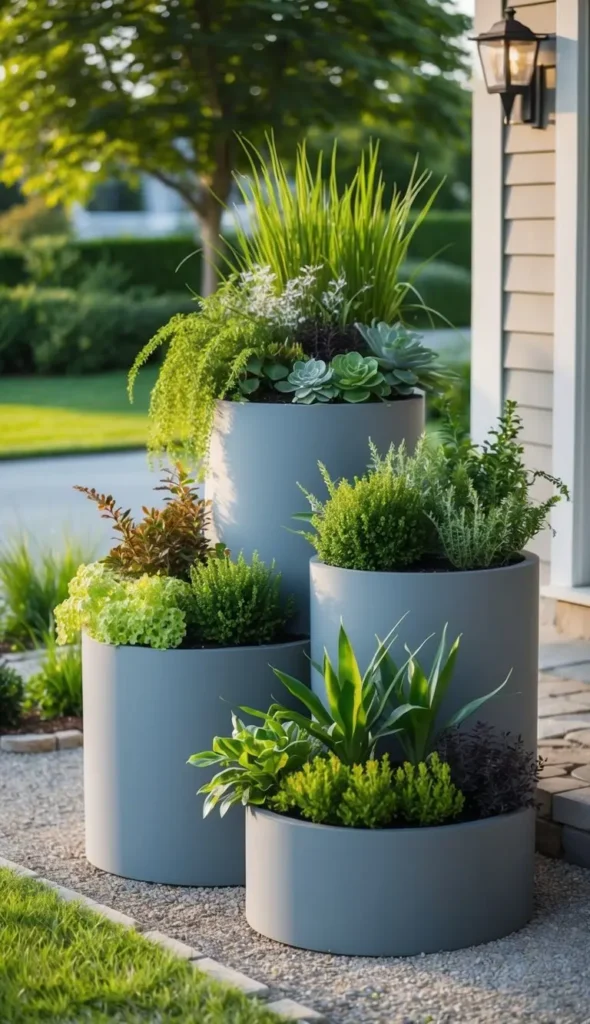
Tiered planters add vertical interest while maximizing limited planting space. They allow for multiple layers of plants in one compact area, ideal for small front yards. Using materials like rot-resistant wood helps ensure durability outdoors. Creating or buying tiered planters can boost curb appeal and organize plants effectively. For ideas on designs, see tiered planters to save space.
11) Add a living wall or vertical garden to maximize small front yards
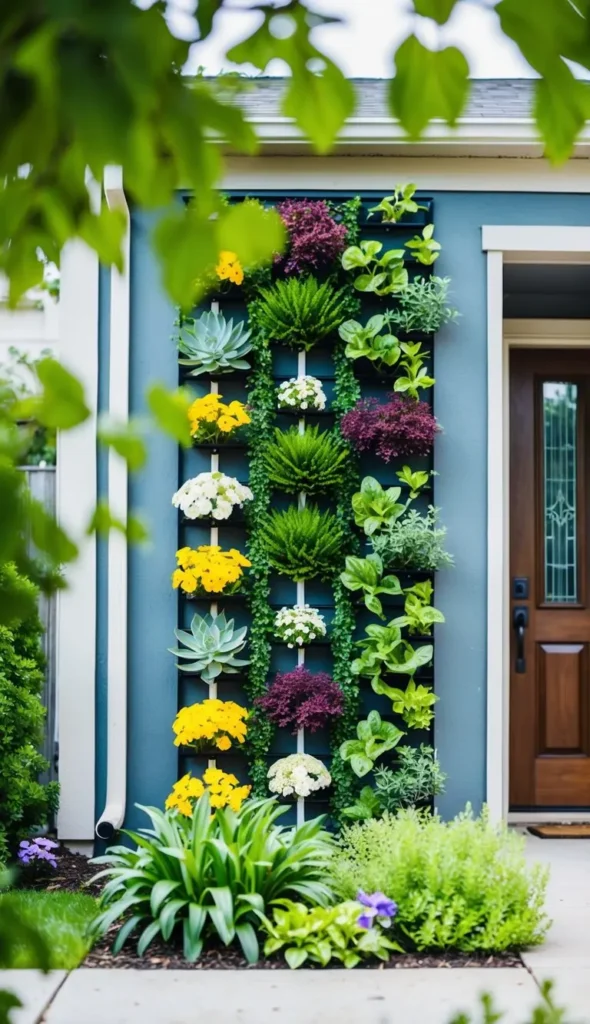
A living wall or vertical garden uses vertical space to add greenery without taking up ground area. It can include climbing plants, succulents, or small potted plants arranged on a structure.
This method creates a natural feature that enhances curb appeal and can act as a privacy screen. For more details on vertical gardening, see this guide on vertical gardening.
12) Choose multi-seasonal perennials like sedum and ornamental grasses
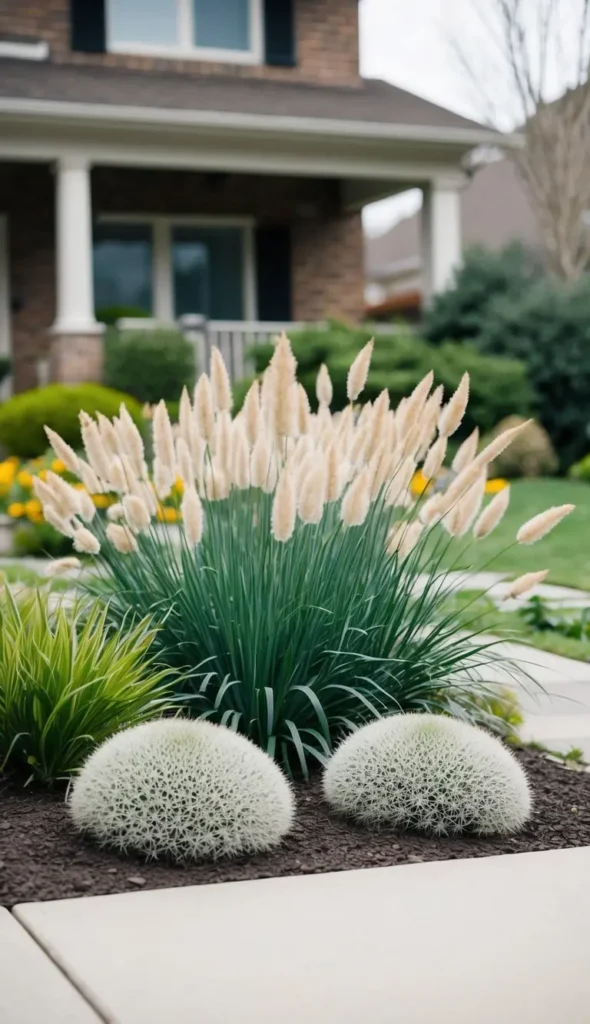
They provide year-round interest and require low maintenance. Sedum is drought-hardy and comes in many forms, making it versatile for different yard areas.
Ornamental grasses add texture and subtle movement. Many varieties offer color changes through the seasons, enhancing curb appeal in all weather. For more options, see ornamental grasses for landscaping.
Front Yard Landscaping Design Principles
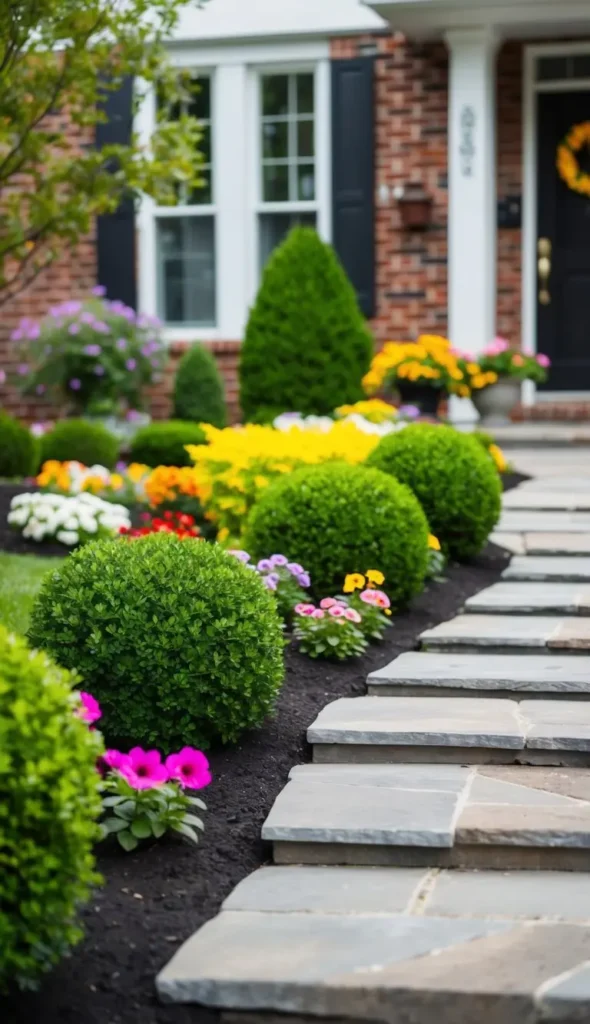
Effective front yard landscaping combines practical use with visual harmony. It requires planning to ensure the space functions well for daily use while enhancing the home’s appearance. Plant choices and layout significantly influence both durability and aesthetic balance.
Balancing Functionality and Curb Appeal
Functionality and curb appeal must coexist in front yard design. Pathways should be direct and durable, utilizing materials like concrete, brick, or gravel to withstand traffic and weather. Avoid narrow or awkward shapes that complicate maintenance and limit usability.
Consider how the space will be used daily—room for seating, play, or gardening must fit naturally into the layout. Lighting placement enhances safety and highlights features without overwhelming the space. Incorporating low-maintenance plants and clear sightlines adds to ease of care and visibility.
Selecting a Cohesive Plant Palette
Choosing plants with complementary textures, colors, and growth habits creates a cohesive look. Evergreen shrubs combined with seasonal flowers provide year-round interest and require staggered maintenance. Symmetry and repetition of select species help tie the design together visually.
Plants should be selected based on local climate, soil conditions, and sun exposure to ensure health and sustainability. Mixing heights and forms adds depth but avoids clutter. Grouping plants in odd numbers and avoiding over-planting allows space for growth and maintenance. For more details on maintaining clean lines and symmetry, see front yard landscaping ideas.
Maintenance Tips for Lasting Results
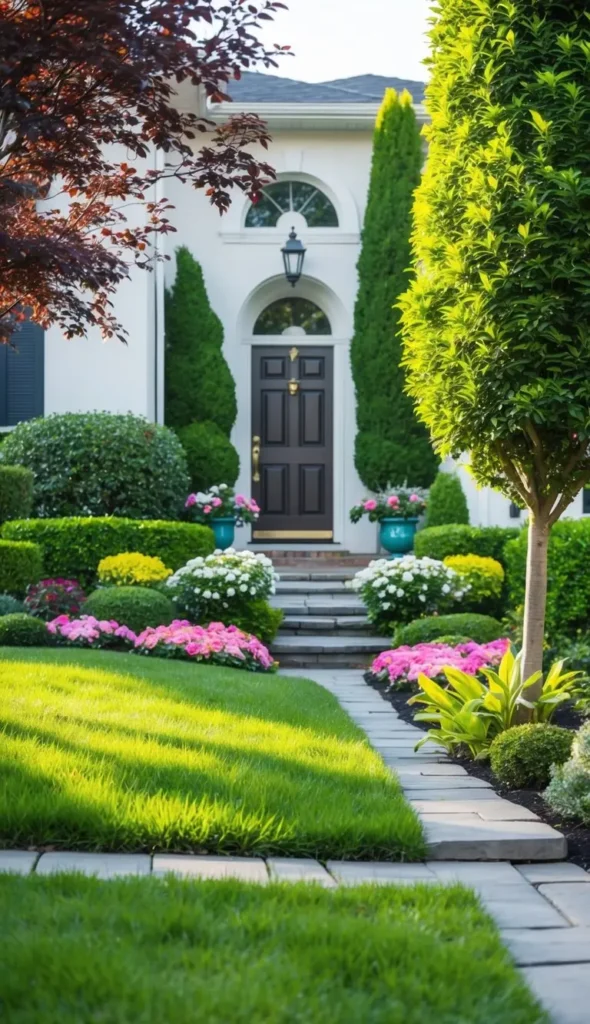
Consistent care tailored to seasonal changes and efficient watering habits ensures a healthy, attractive front yard. Prioritizing timing and method improves plant longevity and reduces resource waste.
Seasonal Care Recommendations
Adjust tasks based on the time of year to support plant health. In spring, focus on pruning dead branches and preparing soil with compost or fertilizer. This encourages new growth.
Summer requires monitoring for pests and diseases as well as mulching to retain moisture. Fall is ideal for planting perennials and cleaning up fallen leaves to prevent mold.
Winter maintenance involves protecting sensitive plants from frost with coverings or mulch. Regularly check structures like irrigation systems to avoid damage during cold weather.
Sustainable Watering Practices
Apply water deeply but infrequently to encourage strong root systems. Early morning watering reduces evaporation and fungal problems.
Installing drip irrigation or soaker hoses delivers water directly to roots, minimizing waste. Group plants with similar water needs together to optimize watering schedules.
Mulching around plants also helps retain moisture and lowers the frequency of watering. Adjust watering based on seasonal rain and soil moisture levels to avoid overwatering. For more detailed tips, see expert advice on sustainable watering here.