20 Decking with Steps Ideas to Connect Your Outdoor Levels in Style

You feel it the first time you step outside and hesitate, one level here, another there, and no smooth way to move between them. Decks with steps solve that pause. They guide your feet, your eye, and the flow of the entire space without you having to think about it.
When steps are done well, they’re more than a way up or down. Wide treads invite sitting. Clean lines create rhythm. Materials and spacing can make different levels feel connected instead of chopped up. Suddenly, the deck feels intentional, not patched together.
This isn’t about adding height for the sake of it, it’s about movement and cohesion. With smart design, steps can soften transitions and add real style at the same time. These decking-with-steps ideas show how thoughtful levels can turn an outdoor space into something that feels seamless, welcoming, and complete.
1) Contemporary Wooden Decking with Steps
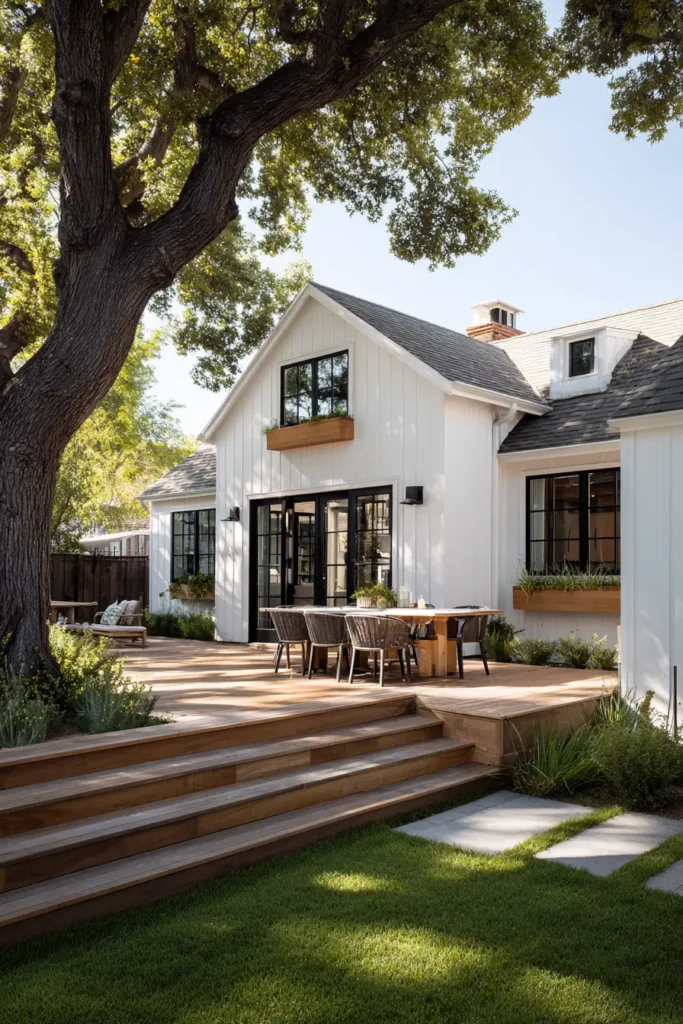
Wide timber steps ease the height change and make the deck feel grounded, not elevated. Deep treads invite lingering, half circulation, half seating, while consistent wood tones keep the transition calm and intentional.
Quick tips:
- Go wide on treads for comfort and casual seating
- Keep materials consistent to avoid visual breaks
- Lower riser height for an easy, natural step flow
2) Contemporary Gray Decking with Steps

Stepped decking feels intentional when structure and planting work together. Boxed timber planters anchor each level, soften hard edges, and guide movement upward without rails. Rough-sawn boards add texture. Gravel below improves drainage and keeps steps visually light. Practical. Calm. Urban-friendly.
Quick tips:
- Integrate planters into steps to replace bulky railings
- Use gravel landings for drainage and subtle contrast
- Stick to one wood tone for a clean, cohesive climb
3) Rustic Modern Deck with Steps
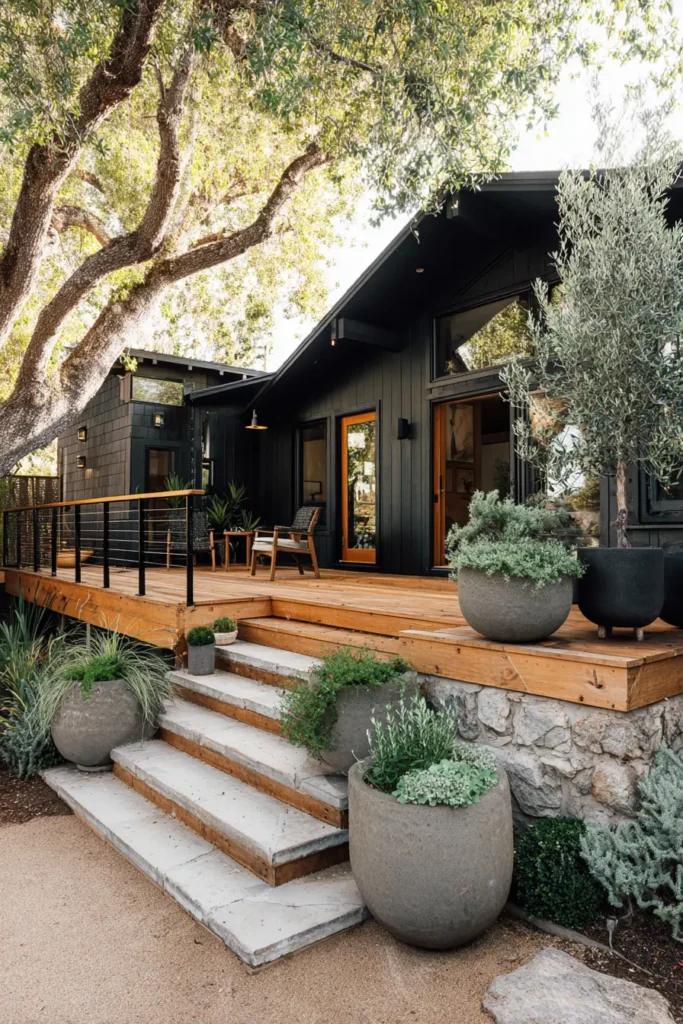
Stone steps ground the deck visually, adding weight and permanence where wood meets soil. Warm timber treads soften the transition, while oversized planters guide movement and frame entry naturally. Mixed materials feel deliberate, not decorative.
Quick tips:
- Pair stone with wood for contrast and long-term durability
- Use planter clusters to steer traffic without railings
- Keep step edges bold for clarity and safer footing
4) Rustic Timber Decking with Steps
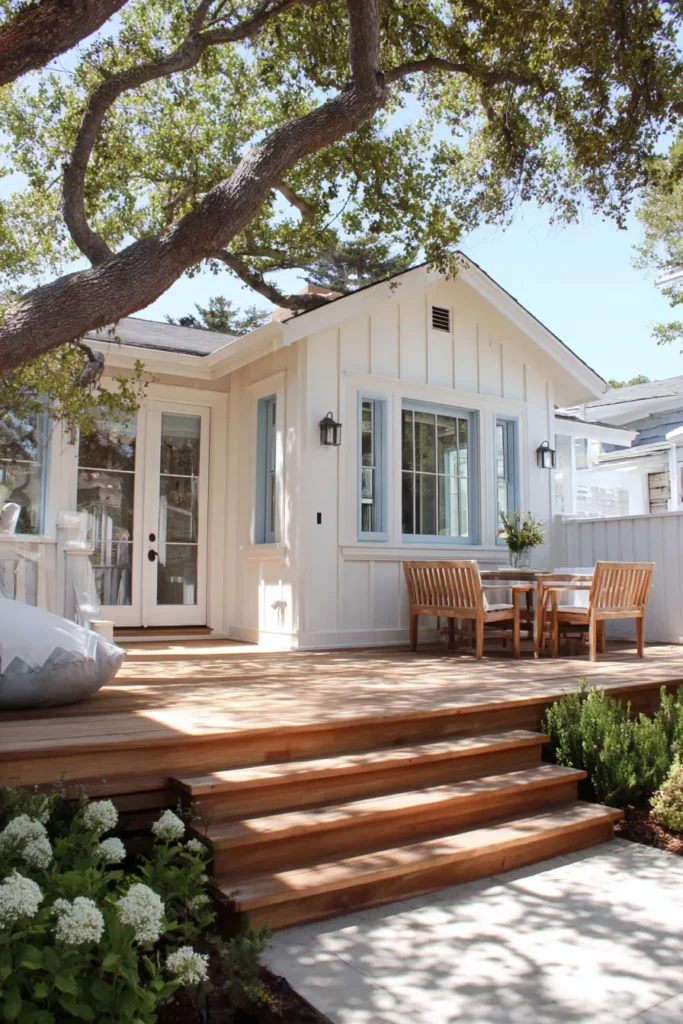
Centered steps give deck a clear arrival point. Wide timber treads slow movement naturally, while soft planting keeps edges relaxed and lived-in. Simple geometry. Strong alignment. Nothing wasted.
Design takeaways:
- Align steps with doors for natural wayfinding
- Choose deeper treads to improve comfort and flow
- Keep borders low so steps stay visually open
5) Rustic Wooden Steps with Lavender Borders
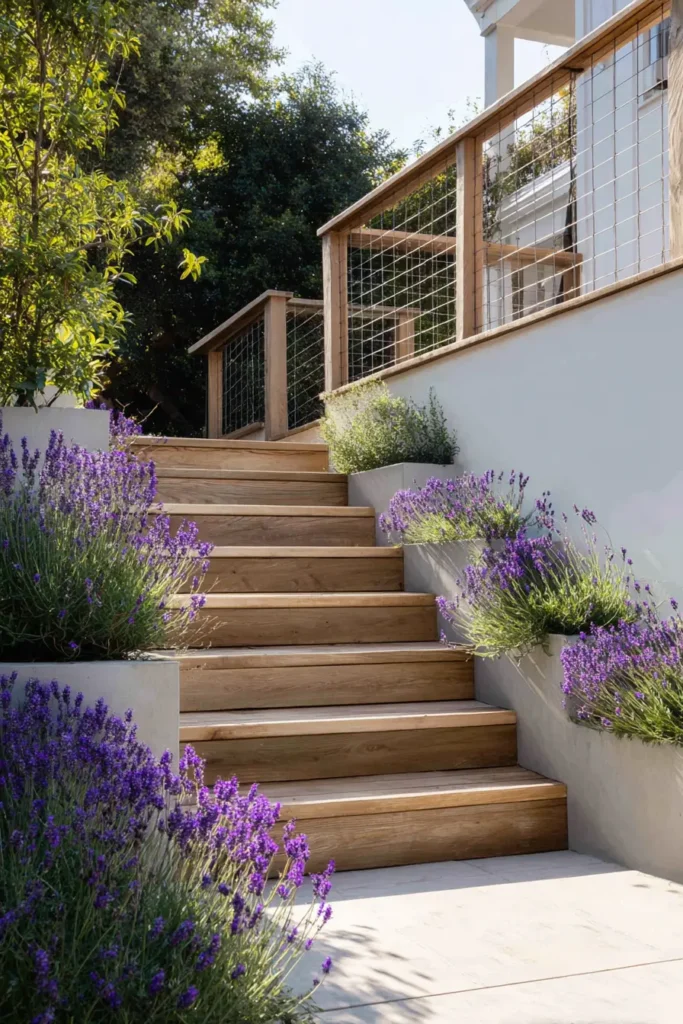
Timber steps feel calmer when framed by planting instead of rails. Lavender-lined edges guide movement upward, add scent, and visually narrow climb without closing it in. Wood stays simple. Plants do heavy lifting. Steps feel intentional, not utilitarian.
Design notes:
- Use low, fragrant plants to soften edges and slow pace
- Keep risers consistent for clean rhythm and safety
- Let planting replace rails where space and codes allow
6) Elegant Steps with Potted White Flowers
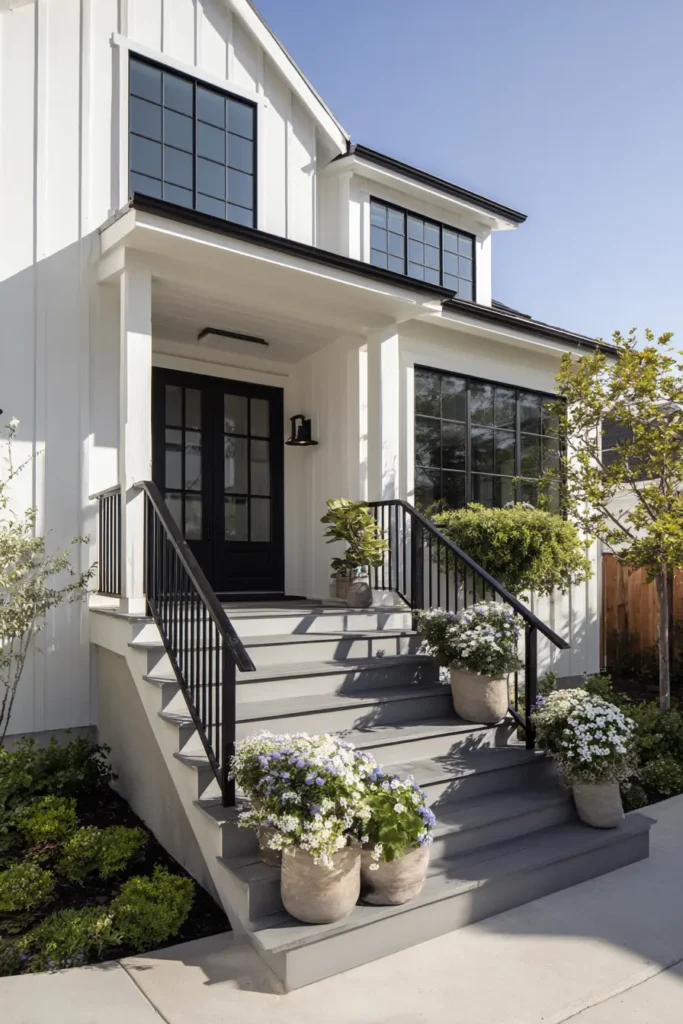
Painted steps sharpen curb presence and set tone before door even opens. Dark railings add structure. Potted florals soften edges and pull focus upward. Clean lines. Clear hierarchy. Steps feel composed, welcoming, and deliberately front-facing.
Design cues to borrow:
- Use contrast railings to frame stair run
- Anchor steps with pots instead of built-ins
- Keep color palette tight for a polished entry look
7) Rustic Wood Decking with Lush Greenery
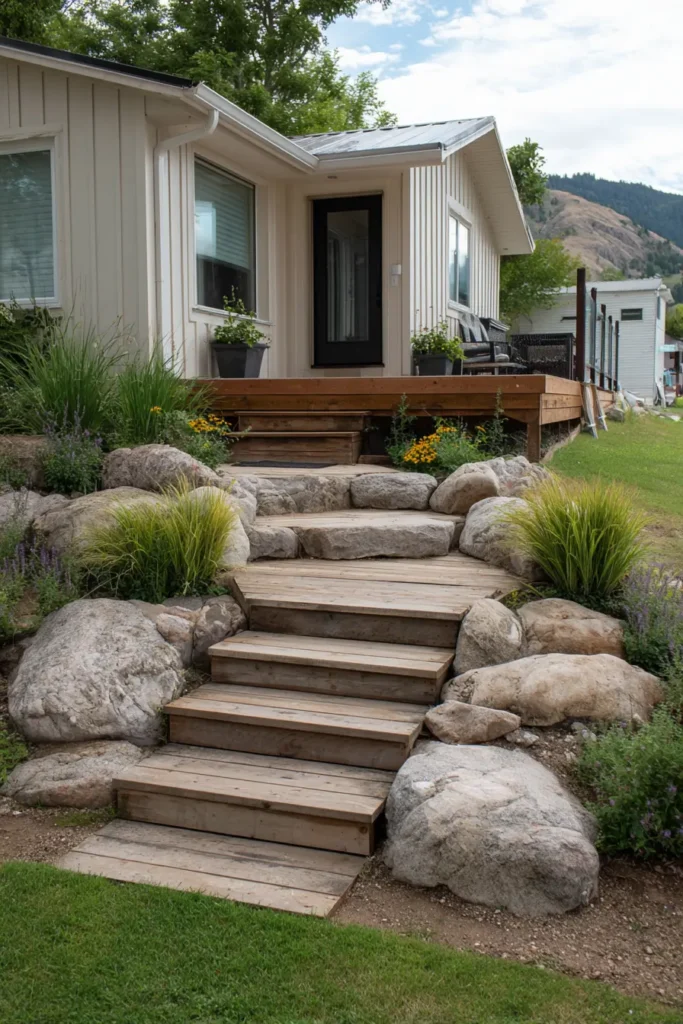
Timber steps settle into landscape when framed by boulders instead of rails. Rough stone edges guide descent, manage slope, and give steps weight without formality. Wood stays approachable. Path feels earned, not engineered.
Key moves:
- Use large stones to stabilize slopes and define edges
- Blend step width gradually to slow movement
- Let planting spill between rocks for softer transitions
8) Rustic Wooden Deck with Colorful Flowers
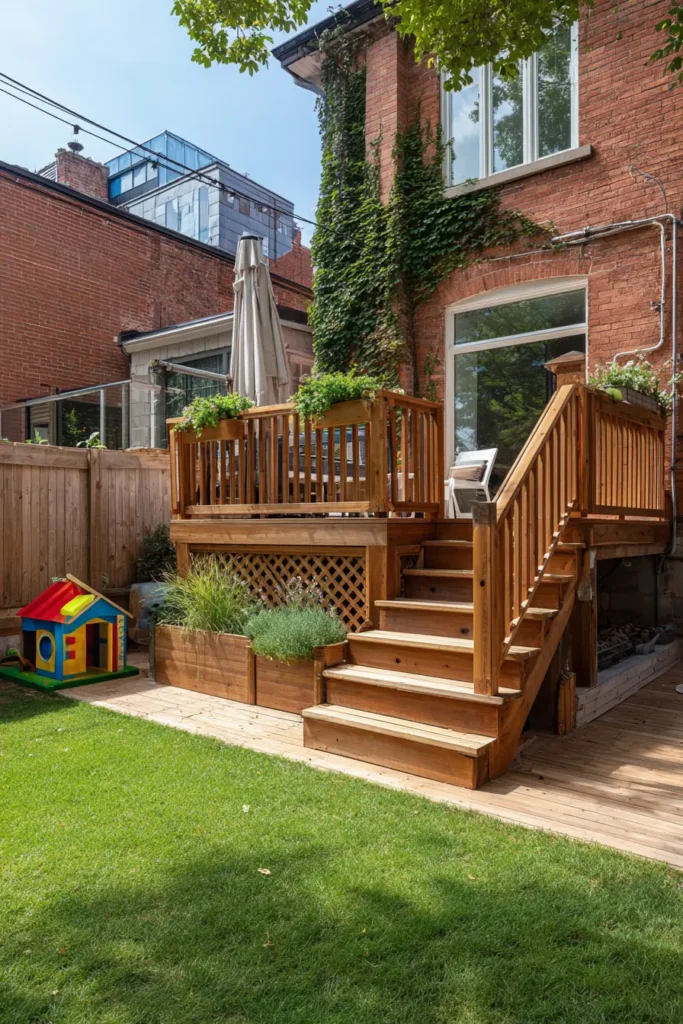
Side-mounted steps keep deck surface open while managing height cleanly. Straight timber run feels sturdy, predictable, easy for daily use. Built-in planters soften bulk below railing line, while lattice skirting hides structure without sealing airflow. Functional first. Still warm.
Worth noting:
- Place stairs to side to protect main deck space
- Add skirting panels to tidy underside visually
- Soften with planters where railings feel heavy
9) Modern Minimalist Decking with Steps
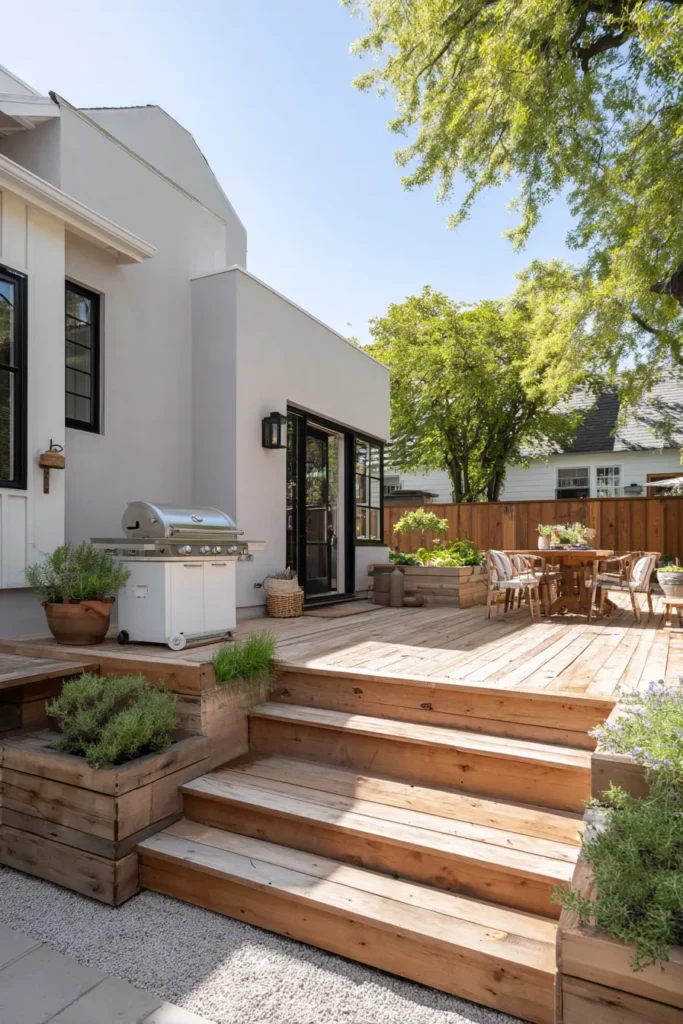
Broad platform steps blur line between stair and deck, giving movement and pause in one gesture. Low risers keep transition relaxed, while built-in planters frame edges and prevent sprawl. Steps double as seating. Circulation stays open.
What works here:
- Use platform steps to extend usable deck space
- Keep risers low for effortless movement
- Frame edges with planters instead of railings
10) Rustic Wooden Deck with Stylish Planters
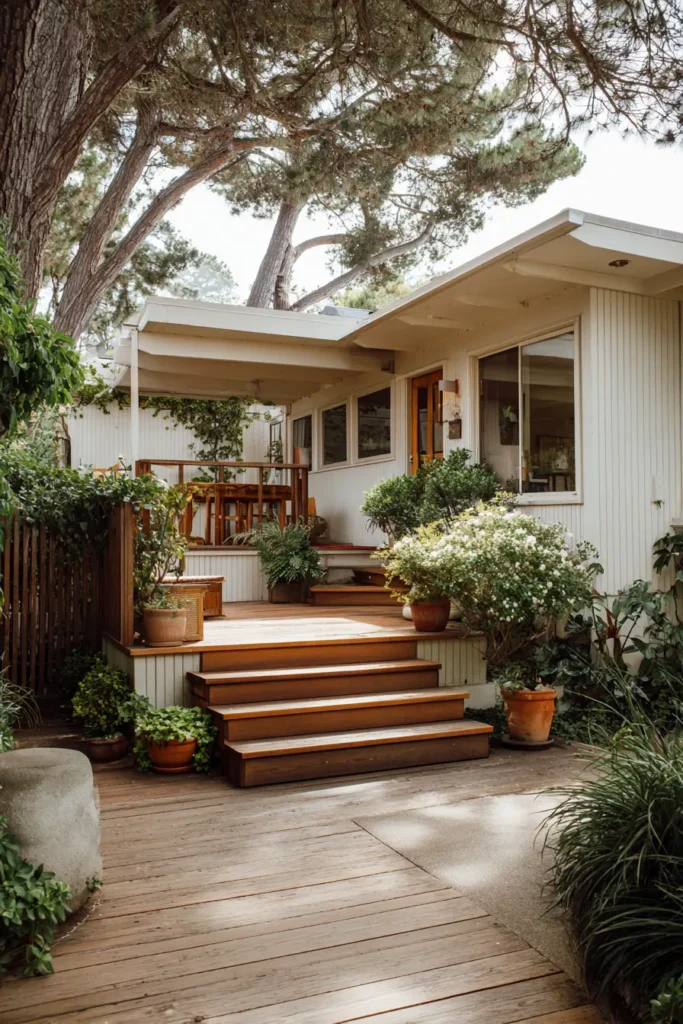
Layered timber steps slow entry and make porch feel settled, not perched. Shallow risers keep climb easy, while clustered planters soften corners and guide approach without rails. Warm wood, filtered shade, gentle progression.
Design cues:
- Use shallow risers to make steps feel relaxed
- Cluster planters near landings for natural guidance
- Let steps widen subtly to signal arrival without formality
11) Elegant Wooden Decking with Hydrangeas
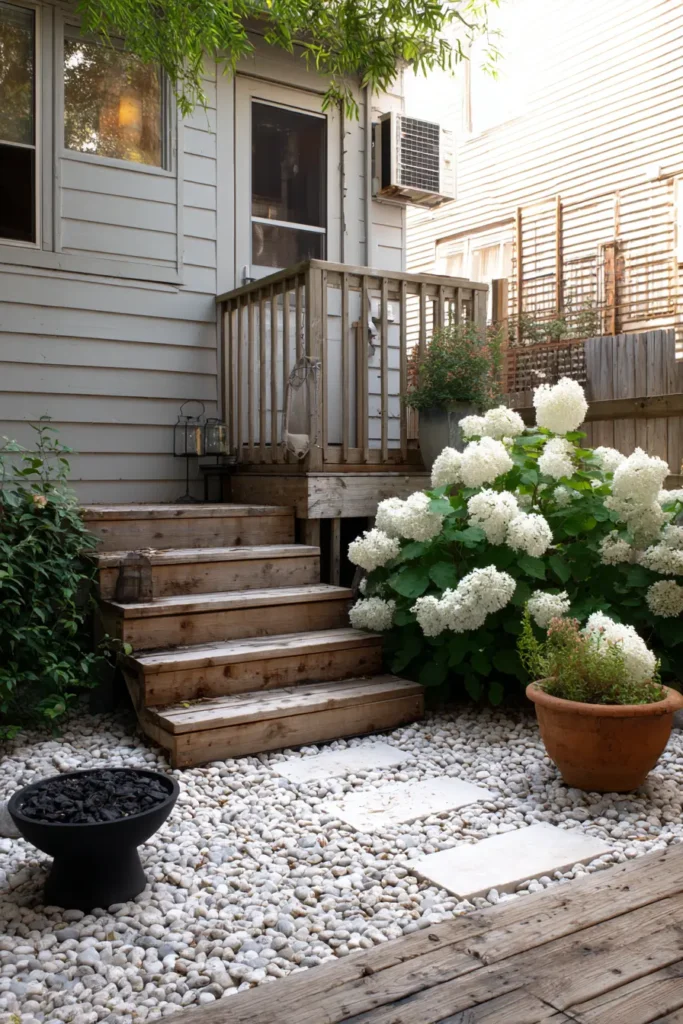
Compact timber steps disappear when wrapped in planting. Hydrangeas and gravel take visual lead, letting structure stay quiet and useful. Soft edges. Short climb. Entry feels private without fencing.
Design takeaways:
- Use planting to mask structure in tight spaces
- Pair gravel with wood for drainage and contrast
- Keep steps narrow when access stays secondary
12) Contemporary Black Decking with Steps
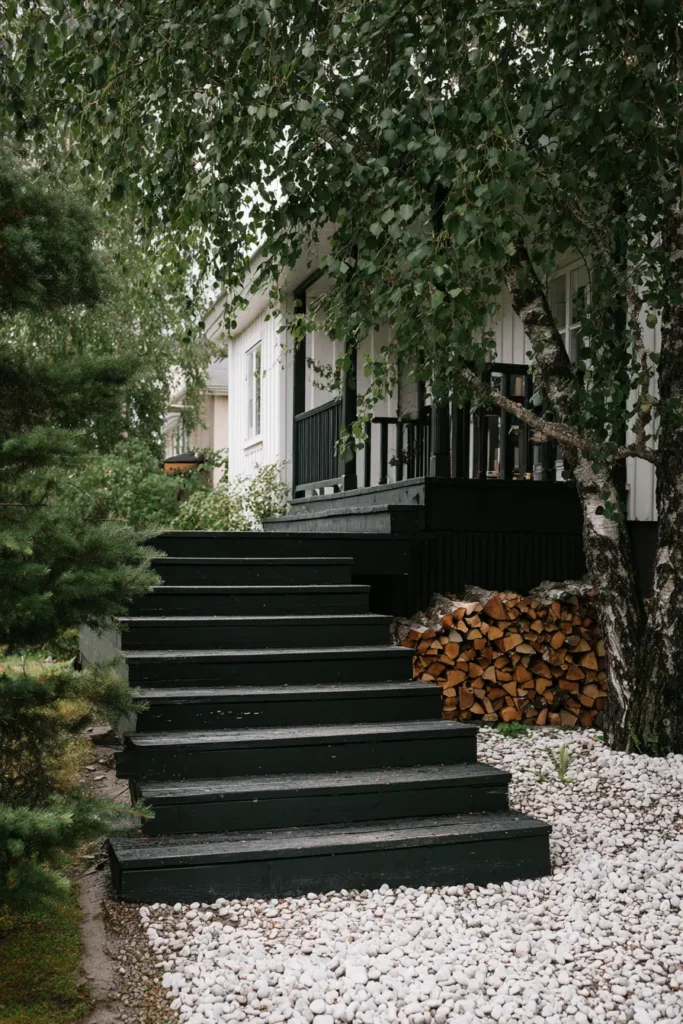
Black-painted steps pull deck into landscape instead of floating above it. Matte surfaces recede under foliage, letting greenery lead. Gravel base sharpens contrast and improves drainage, while stacked firewood adds lived-in warmth. Quiet. Confident.
Design insights:
- Use dark finishes to visually anchor raised decks
- Pair black with gravel for crisp contrast and drainage
- Let surroundings soften edges so steps feel settled, not stark
13) Rustic Wooden Decking with Steps
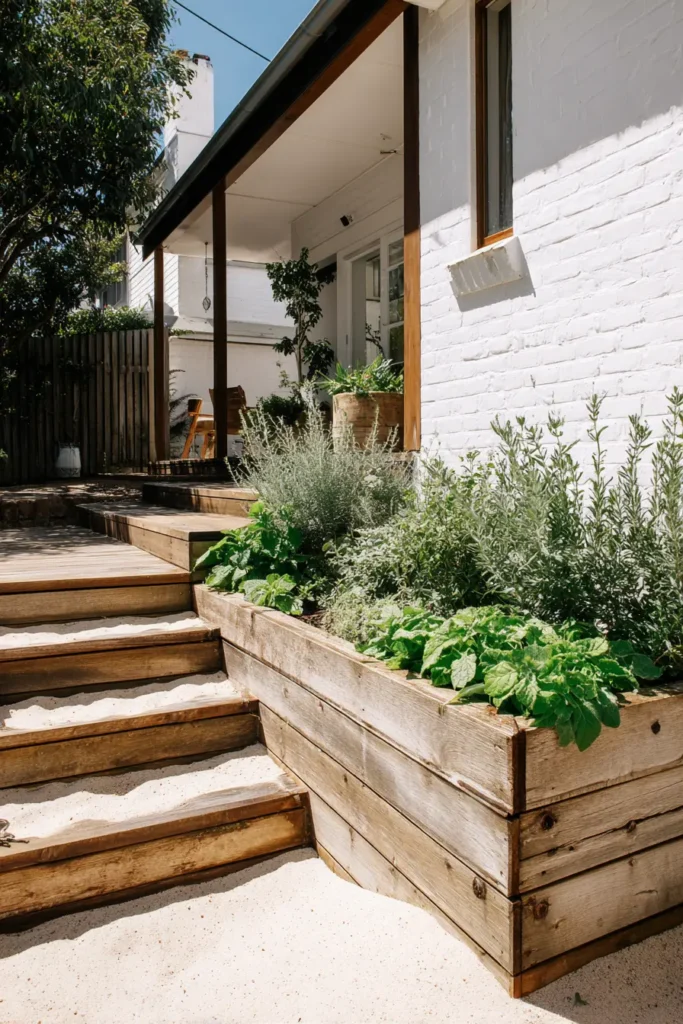
Steps feel intentional when planter walls do double duty. Timber risers lock into boxed beds, keeping edges clean while herbs and shrubs soften every corner. Compact. Practical. Walkway stays clear, garden stays close.
Design notes to steal:
- Combine steps and planters to save space and materials
- Use soil mass to stabilize short stair runs
- Plant low growers so steps remain open and readable
14) Modern Decking with Lavender Accents

Angled timber stairs turn vertical movement into part of outdoor layout, not interruption. Slim railings keep sightlines open, while wide treads slow pace and invite pause. Lower deck works as living zone. Upper level stays distinct. Clear zoning, smooth flow, zero clutter.
Design takeaways:
- Use open risers to keep light moving through space
- Angle stairs to soften tight courtyard geometry
- Break levels deliberately so each zone feels purposeful
15) Rustic Wooden Deck with Flower Boxes

Short timber steps feel welcoming when paired with planted edges and stone paving. Flower boxes soften transition from lawn to deck, while modest height keeps climb informal. Nothing forced. Path reads clearly, stays friendly, works daily.
Things worth copying:
- Keep steps low and few for relaxed backyard access
- Add planting near risers to blur hard edges
- Let paving lead in so steps never feel abrupt
16) Elegant Decking with Greenery Steps
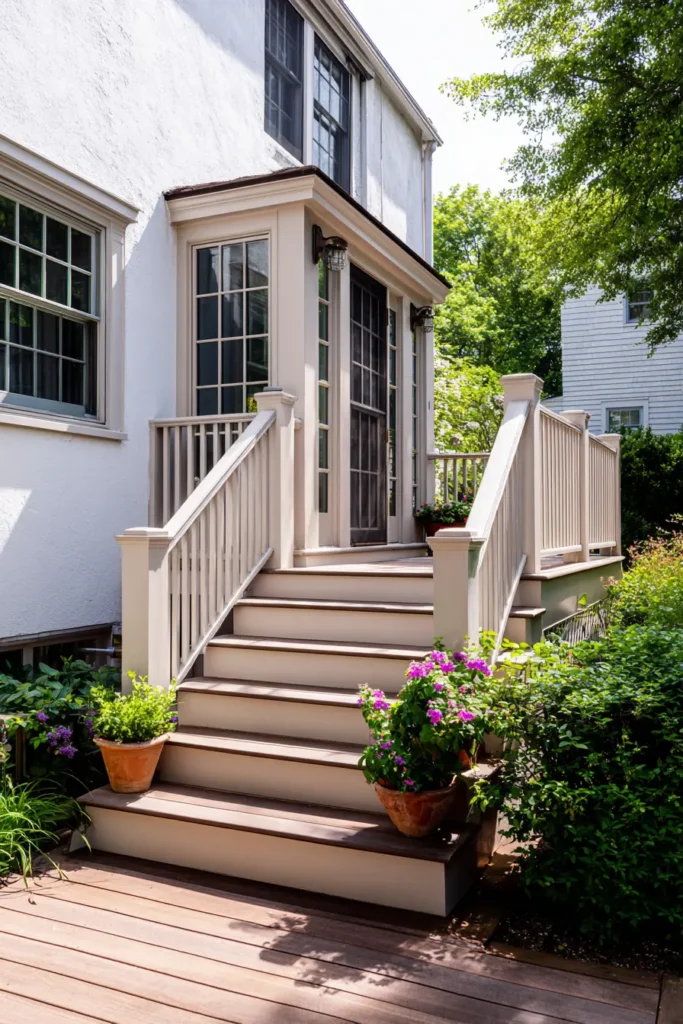
Painted timber steps create a clear, confident approach while slim railings keep climb secure without feeling heavy. Balanced proportions matter here. Paired planters soften symmetry and add lived-in warmth, making entry feel composed rather than formal.
Design notes:
- Frame stairs with rails for clarity and safety
- Use light finishes to keep steps visually open
- Add planters at landings to humanize structured layouts
17) Elegant Decking with Potted Greenery Steps

Wide, shallow steps turn deck entry into a composed pause, not a quick climb. Soft-toned timber pairs cleanly with stone paving, keeping transition elegant and calm. Oversized planters anchor edges and guide movement without rails. Formal, but still warm. Inviting.
Design cues to steal:
- Use wide landings to slow approach and signal entry
- Mix wood with stone for durability and visual balance
- Frame steps with planters instead of heavy rail systems
18) Decking with Walnut and Black Steps
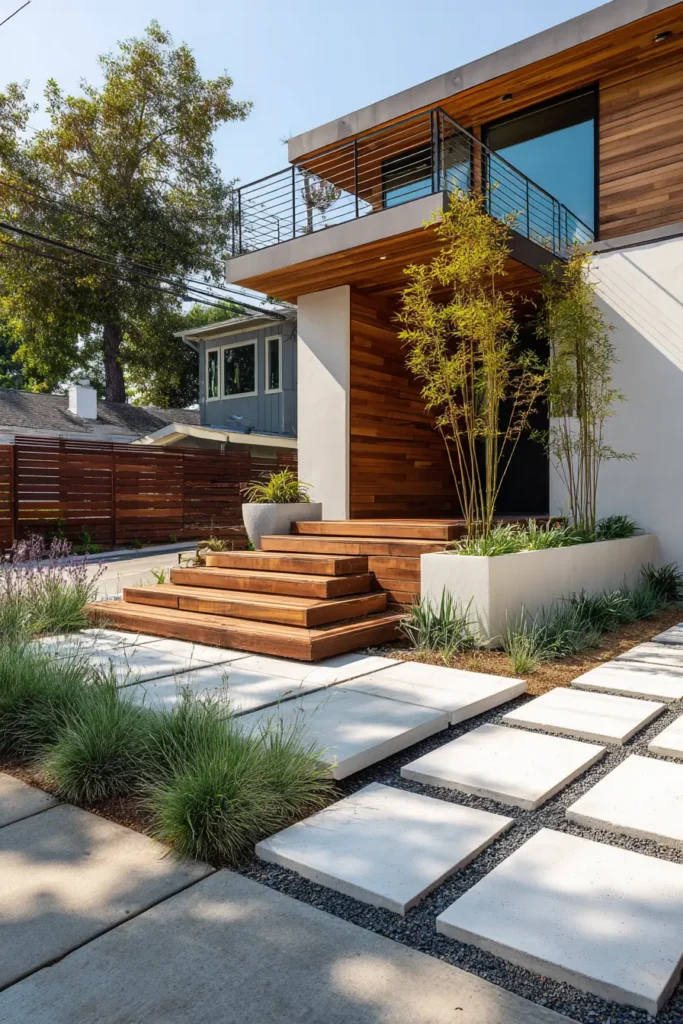
Layered timber steps read almost architectural here. Deep walnut tones add warmth against crisp concrete, while staggered platforms break height into calm, walkable moments. Steps feel intentional, not attached. Vertical bamboo softens edges and keeps geometry from feeling rigid.
Design cues worth stealing:
- Use layered platforms to handle height changes gracefully
- Contrast wood with concrete for modern clarity
- Add vertical planting to soften sharp lines
19) Rustic Wooden Deck with Lush Herbs
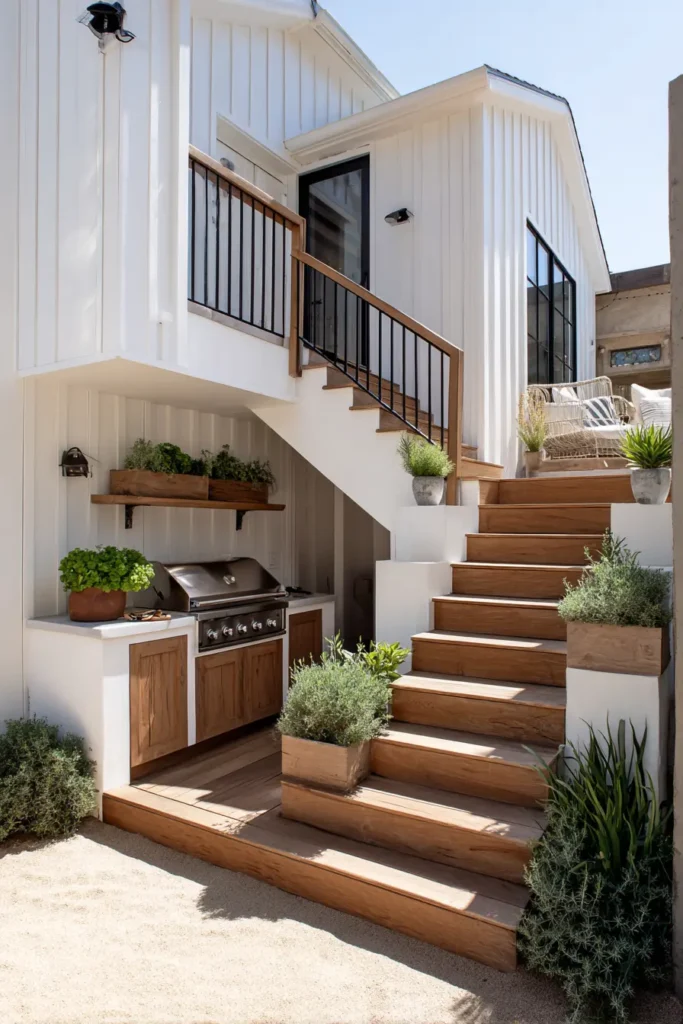
Stairs work harder here. Timber treads double as planters, while landing absorbs an outdoor kitchen without crowding circulation. Clean white structure keeps vertical rise light. Wood adds warmth. Greenery breaks scale. Movement stays intuitive, space stays busy in a good way.
Ideas to borrow:
- Build planters into risers to save footprint
- Use stair landings for functional zones
- Contrast white walls with wood to reduce visual weight
20) Contemporary Decking with Elegant Steps
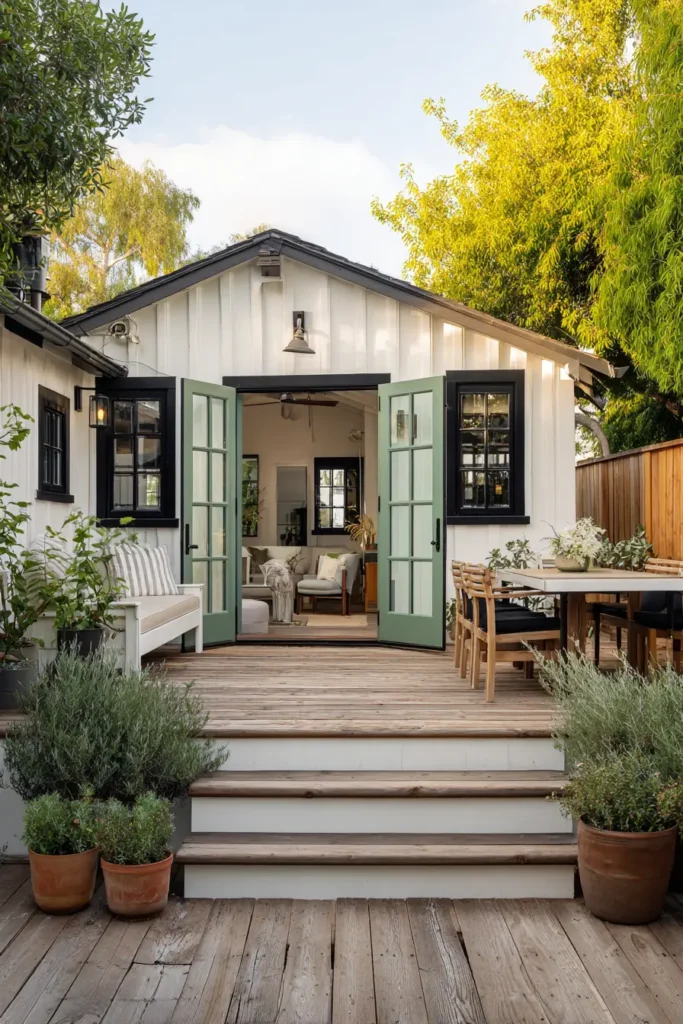
Low, centered steps keep transition smooth and welcoming. Soft risers slow movement, while matching deck boards pull eye straight inside through open doors. Planting stays tight to edges, framing path without crowding it. Calm entry. Easy flow. Space feels shared, not split.
Design cues to borrow:
- Keep steps low and centered to ease movement
- Match decking to interior tone for visual continuity
- Frame edges lightly so entry stays open