How to Build a Cucumber Trellis for Optimal Garden Support and Growth

Growing cucumbers on a trellis has made a big difference in my garden. A simple trellis helps cucumbers grow upward, keeping the fruit cleaner, healthier, and easier to pick. It also prevents the vines from tangling and reduces problems with pests and rot.
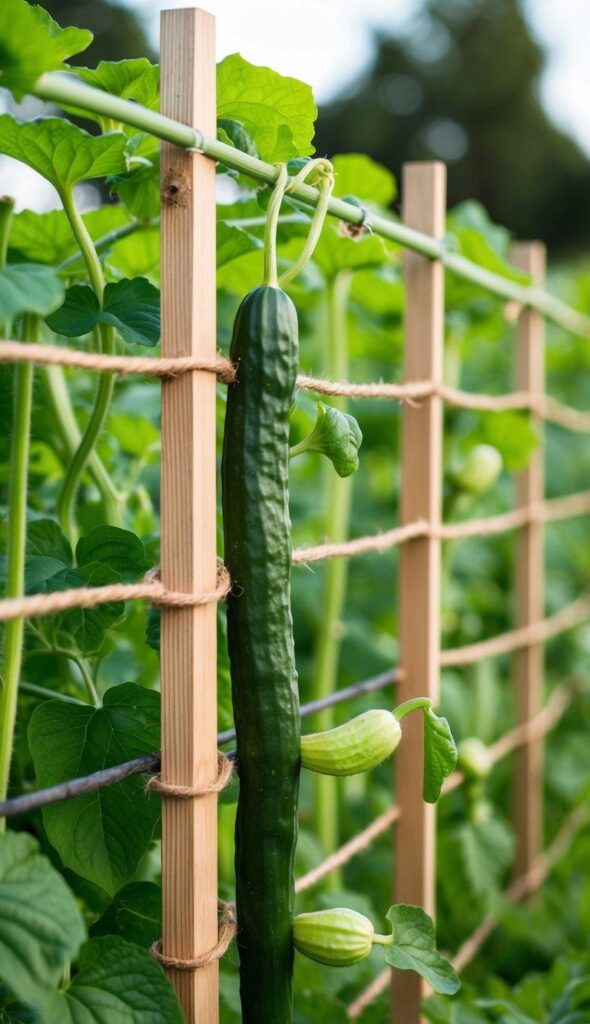
Building a cucumber trellis does not need to be complicated or expensive. I use basic materials like wooden stakes and wire mesh to create a strong, sturdy frame that supports the plants well. With just a little effort, you can create a neat, vertical space that helps your cucumbers thrive.
Choosing the right spot is key. Cucumbers need plenty of sun, so finding a sunny area with enough room for the vines to climb makes a big difference. Once the structure is ready, guiding the young plants to climb the trellis leads to a more organized and productive garden.
Selecting the Right Materials
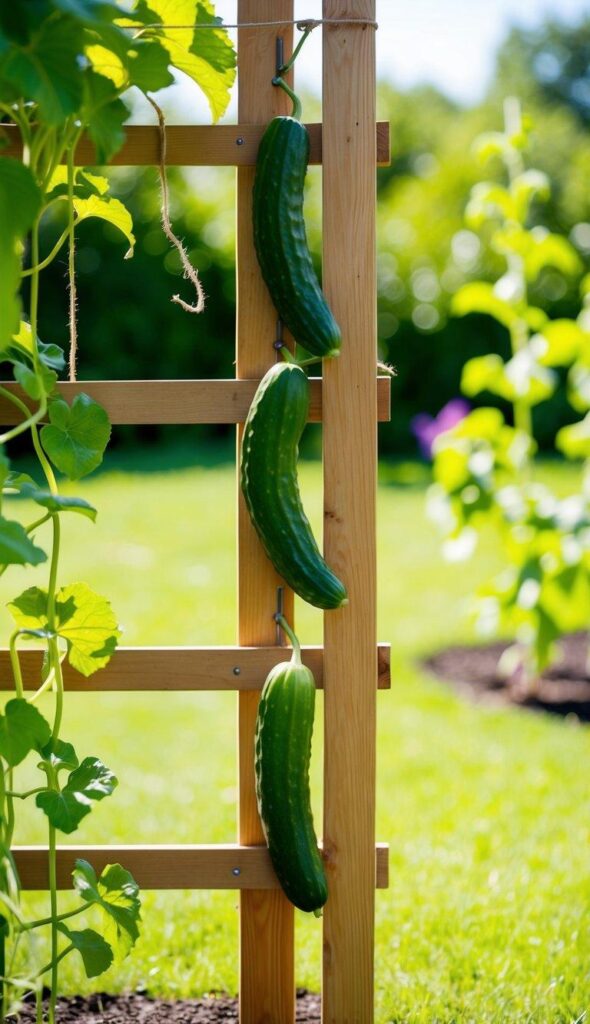
Choosing the best materials impacts the strength, durability, and ease of building a cucumber trellis. It also affects how well the trellis supports the vines and fits in the garden space. I focus on sturdy, weather-resistant materials and tools suited for the size and style of trellis I want.
Choosing Suitable Trellis Types
I often pick between wooden frames, metal rods, or wire mesh. Wooden trellises are easy to build and offer good support but need to be treated against rot. Metal frames last longer and can support heavier vines.
For the climbing surface, I use either chicken wire, hardware cloth, or string. Chicken wire or hardware cloth lets cucumber vines grip better and holds fruit well. String trellises are the simplest and cheapest but may need regular tightening.
I consider the trellis height and width carefully. A typical trellis is around 6 feet tall and 3 feet wide, allowing the vines to spread without overcrowding.
Essential Tools and Supplies
To build a basic trellis, I gather these tools and materials:
- Wood pieces (like 2×2 or 2×4 lumber, cut to size)
- Chicken wire or hardware cloth for the climbing surface
- Galvanized staples or nails to attach wire
- Drill or screwdriver for fastening
- Saw to cut wood
- Measuring tape to ensure proper dimensions
Depending on the trellis design, I sometimes add carriage bolts, washers, and nuts to secure joints firmly. I also keep gloves handy to protect my hands while working with wire and wood.
Assessing Garden Space and Location
Before building, I check where the trellis will stand. It needs full sun for cucumbers to grow well. I pick a spot with easy access for watering and harvesting.
I measure available space to ensure the trellis will fit without blocking other plants. If space is tight, I choose a vertical design to maximize room.
The soil near the trellis must drain well to prevent wood rot and support healthy roots. I avoid windy spots to protect the fragile vines from damage.
Step-by-Step Guide to Building a Cucumber Trellis

Building a cucumber trellis requires careful measurement, solid framing, and a secure way to hold the plants as they grow. I focus on creating a structure that is stable, tall enough for cucumbers to climb, and simple to install in my garden space. Each step ensures the trellis supports healthy cucumber growth and maximizes space.
Planning Dimensions and Structure
I start by deciding the size of my trellis based on the cucumber variety and garden space. Typically, a trellis 6 feet high works well for most cucumber types because it allows enough room for the vines to climb. I plan for the width to be 3 to 4 feet, giving room for several plants along the base.
Before construction, I sketch a simple frame, often choosing an A-frame or rectangular design. This helps me estimate materials and spot any problems in advance. It’s important to keep the structure wide enough for good airflow but not so wide that it becomes unstable.
Assembling the Support Frame
For the frame, I usually use cedar or pressure-treated wood, which resists rot outdoors. I cut two vertical posts and a horizontal top piece to create a shape like a door frame. To add strength, I sometimes build an A-frame by connecting two panels at an angle.
I join the pieces using outdoor screws, ensuring all connections are tight. The frame must stand firm on its own before adding netting or wire. If preferred, metal cattle panels can replace wood to provide a durable and ready-made trellis frame. This method is easy, but you need a way to secure the panels in place.
Securing Netting or Wires
To support the cucumber vines, I attach wire mesh or garden netting to the frame. I use 4-inch wire mesh because it’s strong and holds the vines well without damaging them. The netting needs to be pulled tight and stapled or nailed securely along all frame edges.
If using wires, I string them horizontally across the frame about 8 to 12 inches apart. I fix the wire to the frame using eye screws or hooks, tightening it to prevent sagging. Netting or wires should cover the entire climbing area so vines have constant support as they grow upward.
Positioning and Anchoring the Trellis
After building the frame, I position the trellis where the cucumbers get at least 6 hours of sunlight daily. I plant cucumber seeds or seedlings about 6 to 12 inches from the base, giving roots room to spread.
To keep the trellis stable in wind or heavy plants, I bury the vertical posts 12 to 18 inches into the ground or use metal stakes and concrete bases. Securing the trellis prevents it from tipping and damaging young plants. After anchoring, I check stability by gently shaking it before training cucumbers to climb the support.
You can find more detailed tips on metal mesh trellises and framing options at Our Happy Backyard Farm.
Frequently Asked Questions
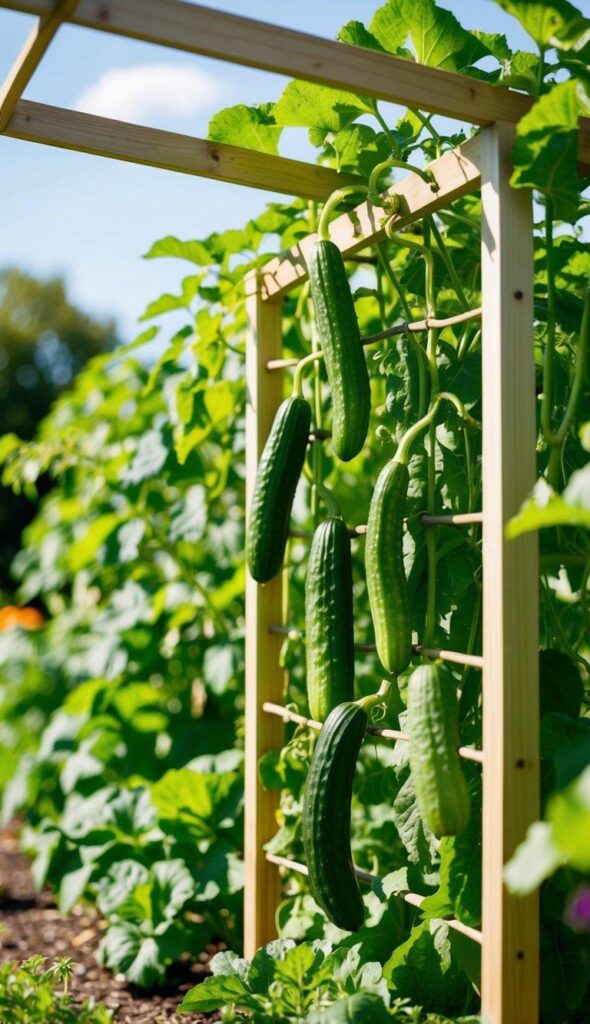
Building a cucumber trellis requires selecting strong materials, choosing space-saving designs, and sometimes using items you already have at home. Each choice affects how well the trellis supports the plants and fits in your garden.
What materials are required to construct a durable cucumber trellis?
I recommend using sturdy materials like treated wood or metal for the frame. Wire mesh or strong garden netting works well to support the vines.
Make sure the mesh openings are about 4 inches square, large enough for the cucumber tendrils to grip but small enough to hold the fruit securely.
What designs are recommended for cucumber trellises in small garden spaces?
A vertical trellis saves space. I like using an A-frame or a simple rectangular frame placed near the raised beds. This design helps the cucumbers grow upward rather than outwards.
Another option is attaching vertical supports directly to garden beds to maximize limited space.
How can one create a cucumber trellis using readily available household items?
I have used items like old tables or wooden pallets as trellis frames. Adding wire mesh or garden netting to these can provide good support.
You can also repurpose stakes or poles found around your yard by tying string or twine between them to create a climbing structure.
For detailed steps on building a trellis, you might find this guide on building a cucumber trellis helpful.