How to Create a Backyard Vegetable Garden for Optimal Yield and Sustainability

Creating a backyard vegetable garden is a practical way to grow your own fresh produce while making good use of your outdoor space. To get started, you need to select a sunny spot, prepare the soil, and choose vegetables that suit your climate and taste. The key to a successful garden is planning your space carefully and providing your plants with the right conditions to thrive.
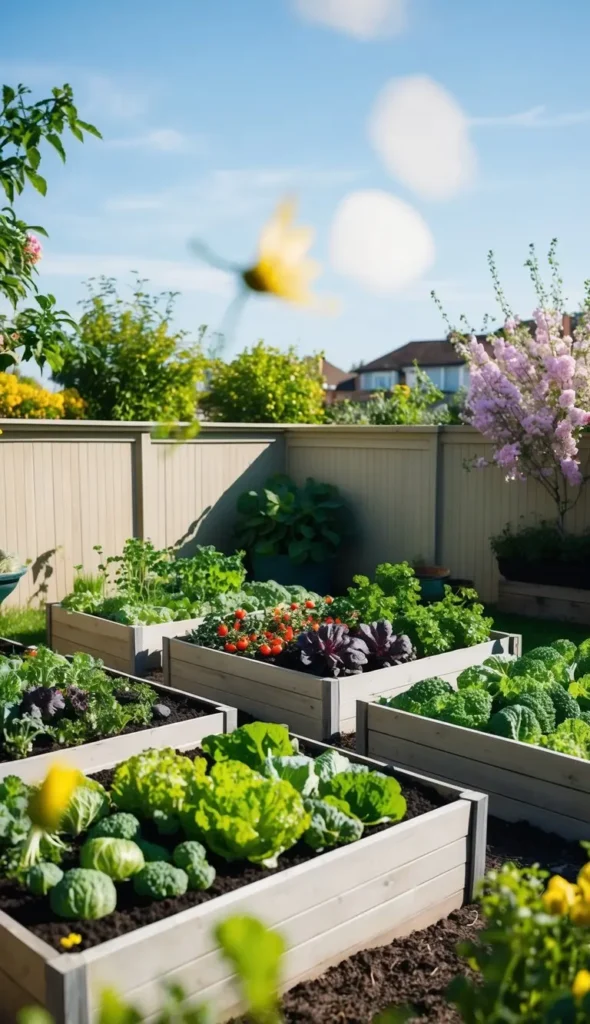
You will want to consider raised beds or wide planting areas to maximize your garden’s productivity and make care easier. Testing your soil and amending it with nutrients will also help your plants grow strong and healthy. By following simple steps like these, you can turn your backyard into a productive vegetable garden.
Learning what to plant and when, along with proper care, will help you maintain your garden year-round. With some effort and attention, you can enjoy fresh vegetables from your own yard and the satisfaction of growing your own food. For more detailed guidance on starting your garden, see how to get started effectively.
Planning Your Backyard Vegetable Garden
You need to carefully evaluate your garden’s conditions and decide which vegetables will grow best. Proper planning also involves choosing an efficient layout that fits your available space and gardening goals.
Assessing Sunlight and Space
Your vegetable garden should get at least 6 to 8 hours of direct sunlight every day. Most vegetables need full sun to grow well.
Look at your yard throughout the day to see where the sun shines longest. Avoid areas shaded by trees, buildings, or fences.
Measure the available area for your garden. Note any slopes or uneven ground that could affect water drainage. Flat spots usually work best.
Make a simple sketch or map of your yard’s sunny spaces. This will help you place your garden where plants can thrive.
Selecting Suitable Vegetables
Choose vegetables that match your climate and soil type. Cold-tolerant plants like lettuce and spinach work in cooler seasons. Warm-season crops such as tomatoes and peppers need higher temperatures.
Think about what your family eats most. Start with a few favorite vegetables to keep the garden manageable.
Check the average growing time for each plant. Select crops that will mature within your local growing season.
To maximize space, plan for both fast-growing vegetables like radishes and slower ones like carrots.
Deciding on Garden Layout
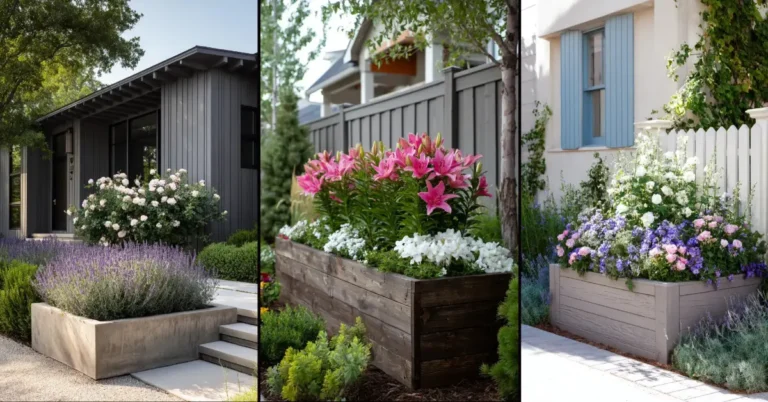
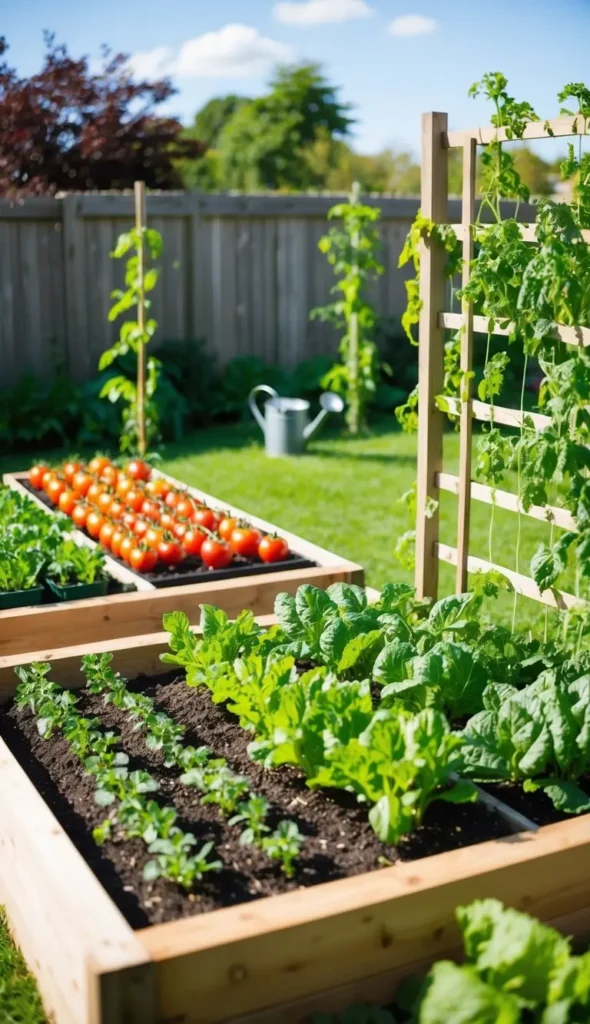
Raised beds or wide rows (3 to 4 feet) are better than traditional narrow rows. They allow easier access and improve soil drainage.
Plan paths of at least 1 to 2 feet between beds for easy movement and maintenance.
Group plants by their water and sunlight needs. For example, place sun-loving tomatoes together in the sunniest spots.
Consider vertical gardening or trellises for climbing plants to save space.
List your chosen plants and their spacing needs. Draw your garden layout on paper before planting to avoid overcrowding and to organize your work efficiently.
For more detailed layout tips, see vegetable garden layout planning.
Establishing and Maintaining the Garden
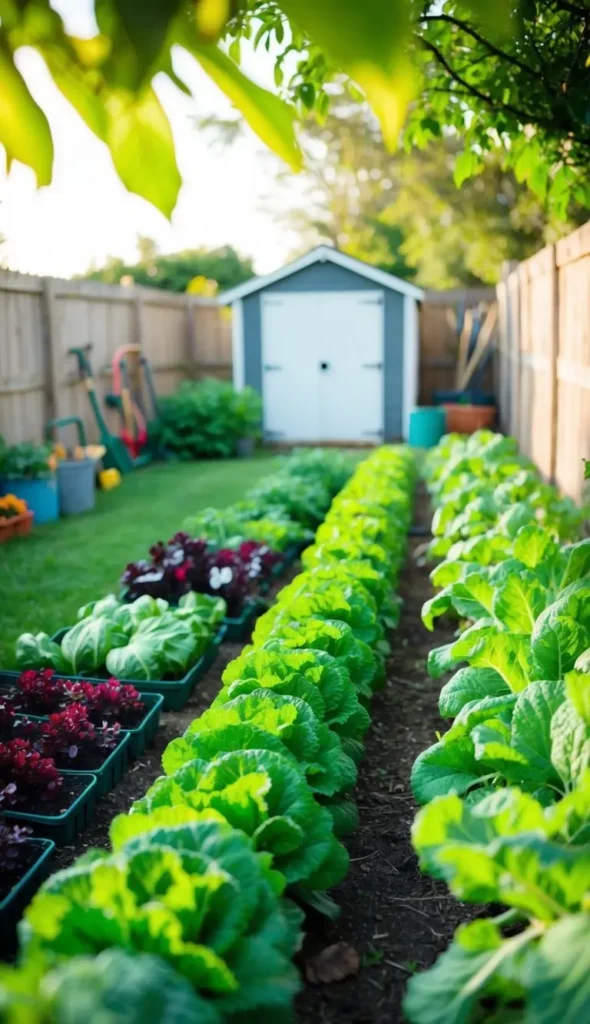
To create a thriving backyard vegetable garden, you must start with good soil, plant correctly, and care for your plants with proper watering and feeding. These steps help your vegetables grow strong and healthy from the beginning.
Preparing Soil for Planting
Your garden’s soil needs to be loose and nutrient-rich. Begin by removing any grass, weeds, or large stones.
Next, test your soil’s pH. Most vegetables do best in soil with a pH between 6.0 and 7.0. You can buy a simple soil test kit for this. If the soil is too acidic or alkaline, you may need to add lime or sulfur to adjust it.
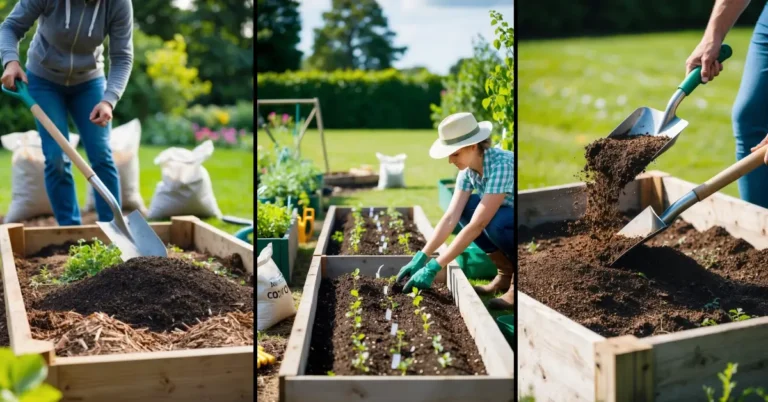
Add organic matter such as compost or well-rotted manure. This improves soil texture and supplies nutrients. Mix it well into the top 6 to 8 inches of soil.
Avoid compacted soil by turning it lightly with a shovel or garden fork. This lets roots grow easily and improves air and water flow.
Proper Planting Techniques
Plant seeds or seedlings according to the instructions on their packets. Pay attention to depth and spacing.
Planting seeds too deep can prevent sprouting. Most seeds need to be placed at a depth about twice their size.
Leave enough space between plants to let them grow without crowding. Crowded plants can cause diseases and reduce yield.
Use rows or raised beds for easy access. Mark your rows with string or markers to keep plants organized.
After planting, press the soil gently around seeds or seedlings to remove air pockets.
Watering and Fertilizing Practices
Water your garden regularly, aiming for 1 to 2 inches per week. Water early in the morning to reduce evaporation and disease risk.
Use soaker hoses or drip irrigation to deliver water directly to the soil and roots. This keeps leaves dry and prevents fungal problems.
Apply fertilizer based on plant needs. Balanced fertilizers like 10-10-10 work for most vegetables. Follow package directions for amounts and timing.
Avoid over-fertilizing, which can cause leaf growth but poor fruit or vegetable development.
Mulch around plants with straw or shredded leaves. Mulch helps keep moisture in the soil and lowers weed growth.
For more detailed guidance, see Backyard Vegetable Gardening for Beginners.
Frequently Asked Questions
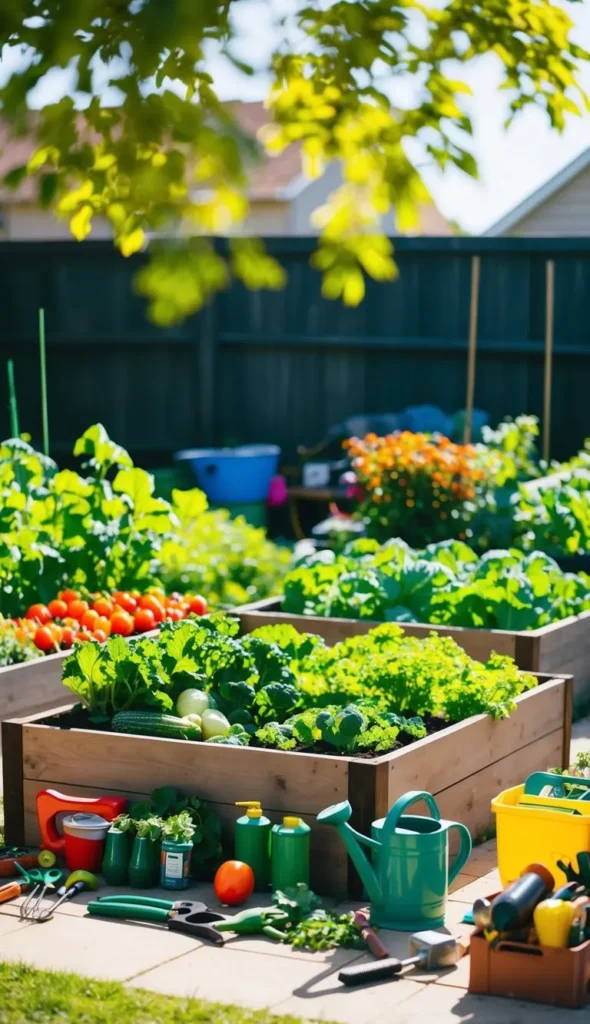
You need to prepare the soil properly and choose the right plants for your climate. Your garden layout should maximize sunlight exposure and allow easy access for watering and harvesting. Budget-friendly options include using seeds, compost, and recycled materials.
What are the essential steps for establishing a backyard vegetable garden?
Start by selecting a location that gets at least 6 hours of sunlight each day. Test and improve your soil to ensure it is well-drained and nutrient-rich.
Next, decide what vegetables you want to grow based on your climate and space. Plant seeds or seedlings at the right time for your area.
Water regularly but avoid overwatering, and keep an eye out for pests.
What considerations should be made when planning a vegetable garden layout?
Choose a site with enough sunlight and good drainage. Arrange your plants so taller ones don’t shade shorter ones.
Leave paths between rows for easy walking and maintenance. Group plants with similar water and sunlight needs together.
Consider companion planting to help control pests naturally.
How can I grow a vegetable garden on a limited budget?
Start seeds indoors or buy inexpensive seed packets rather than mature plants. Use kitchen scraps to create compost, which improves soil for free.
Reuse containers or build raised beds from recycled wood. Focus on growing vegetables that have a high yield but low cost, like beans or leafy greens.
For more detailed advice, see vegetable gardening for beginners at gardeners.com.