Ryobi Lawn Mower Troubleshooting [Fixes 6 Common Issues]

Ryobi lawn mowers are reliable, but like any machine, they can develop issues over time. Whether your mower won’t start, cuts unevenly, stops suddenly, or has drive problems, most issues trace back to power delivery, safety systems, or basic wear parts.
This troubleshooting guide covers the most common Ryobi lawn mower problems and how to diagnose them efficiently.
Before You Start Troubleshooting
Always do the following first:
- Remove the battery (for electric models)
- Disconnect the spark plug (for gas models)
- Allow the mower to cool completely
- Work on a flat, stable surface
Many mower issues are caused by simple oversights, so start with the basics.
I have come up with a complete Ryobi lawn mower troubleshooting guide to help you out. Go through the guide to find the common problems, their symptoms, effective fixes, and expert tips. Let’s begin.
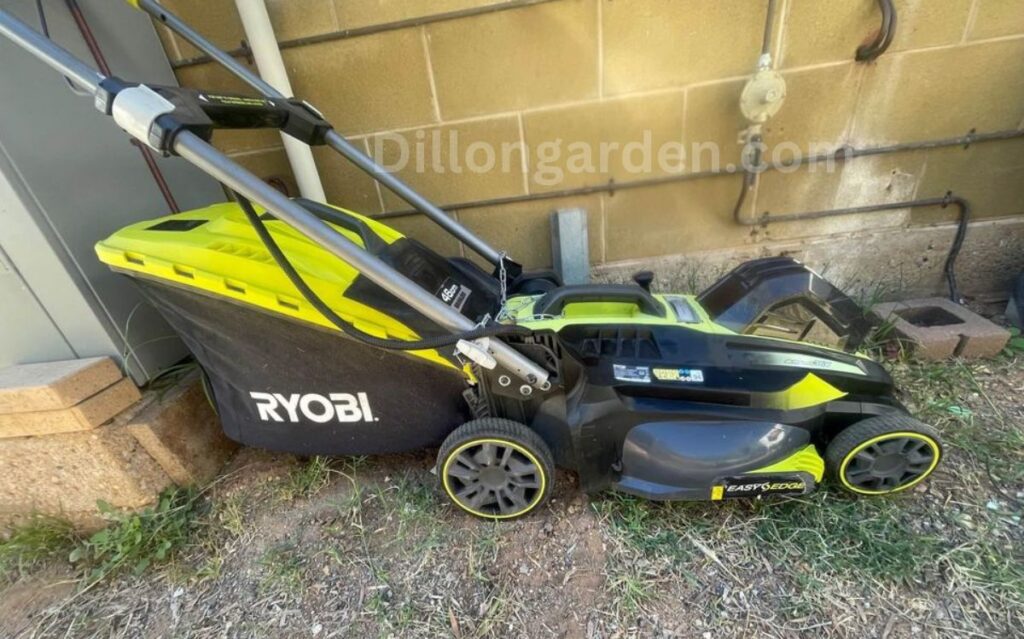
1. Ryobi Lawn Mower won’t start
Possible Causes
- Battery not fully charged or not seated correctly
- Faulty safety switch or handle not fully engaged
- Bad spark plug (gas models)
- Blown fuse or wiring issue
What to Check
- Fully charge and reseat the battery
- Lock the handle completely upright
- Inspect spark plug for wear or fouling
- Check fuse (if equipped)
A mower that won’t start is often blocked by a safety interlock, not a failed motor.
Read: 8 Common Kohler EFI Engine Problems [Troubleshooting Guide]
How to Troubleshoot This?
- Visually inspect the spark plug for signs of carbon deposit. If the deposit is low, scrub off the buildup. You can also test the spark plug with a spark plug tester. There should be sparks between the terminals of the tester if the spark plug is good. Otherwise, replace the spark plug.
- Use a carburetor cleaner to flush the carburetor. This should clear the clog.
- Check the start switch connections with a multimeter. If the multimeter shows no variation in voltage, the switch is faulty. You should replace it.
- Clean the fuel filter to remove clogs. If the filter is too dirty, i.e., one side is completely blocked, it is better to replace the filter.
Note: Follow a regular maintenance routine to prevent deposits and use high-quality fuel to avoid contaminations.
You can also check this video out:
2. Stalling After Starting
Common Reasons
- Overheating battery
- Fuel delivery issue (gas models)
- Clogged air filter
- Low-oil shutdown system activating
Read: John Deere Hydrostatic Transmission Will Not Engage
Fix
- Allow battery to cool and retry
- Clean or replace air filter
- Check oil level (do not overfill)
- Inspect fuel cap vent and fuel flow
This problem usually points to restricted airflow or fuel, not electrical failure.
3. Dying Battery
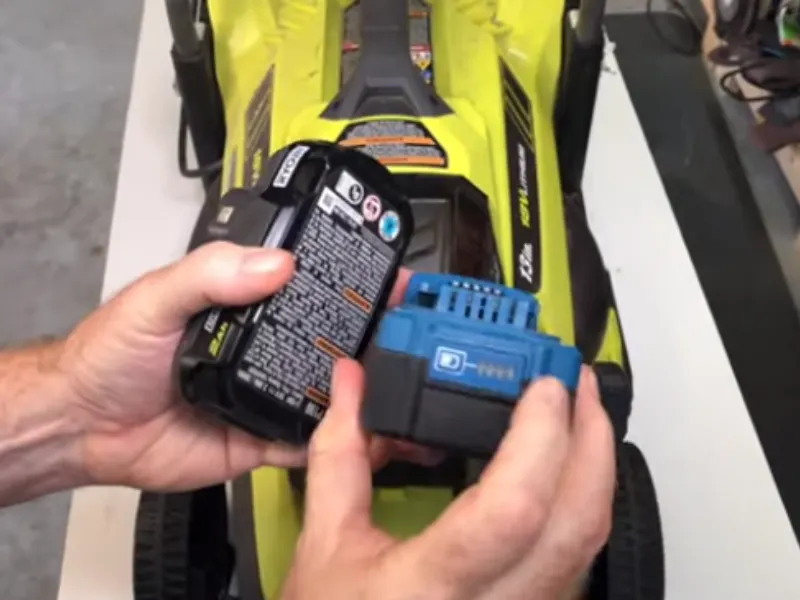
Reasons
- Thick or wet grass
- Dull blade increasing load
- Aging battery
- Continuous high-power use
Tips
- Mow dry grass only
- Keep blade sharp
- Use correct cutting height
- Replace batteries that no longer hold charge
Battery performance issues often reflect cutting conditions, not battery defects.
4. Leaking Gas
If your Ryobi lawn mower consumes too much gas than usual, the gas is probably leaking from the machine. Here are the reasons behind it.
- Stuck Float Valve: The float valve opens and closes as required to ensure the right amount of fuel is entering the carburetor. The valve may be stuck in a partially open position due to clogs or debris. As a result, more fuel than necessary will enter the carburetor and overflow.
- Cracked Carburetor Gasket: The rubber gasket of the carburetor can become brittle as the machine ages. It will then develop cracks, and fuel will leak through the cracks. You may see amber fuel marks below the carburetor.
- Loose Connections in the Fuel Line: Fuel lines transfer the fuel from the tank to the carburetor. If these lines are loose, fuel can leak from there.
Read: How To Tell If Hydrostatic Transmission Is Bad? [5 Sign + Fixes!]
How to Troubleshoot This?
- Check the float valve assembly to see if the float valve opens or closes completely. If not, clean any clogs or debris using a chemical cleaner.
- See if there are any cracks in the carburetor gasket. If so, replace the gasket.
- Check connections in the fuel line. Tighten the lines if there is a loose connection.
Note: Keep an eye on the fuel gauge to understand if the fuel consumption is usual.
5. Faulty Self-Propelling System
Besides push mowers, Ryobi makes self-propelling mowers. But the system can have the following problems at times.
- Worn Drive Pulley or Belt: The drive pulley and belt send power from the engine to the wheels in conjunction. Over time, these parts can wear out. As a result, they won’t be able to send the necessary power to the wheels.
- Transmission Problems: Hydrostatic transmissions used in lawnmowers can develop multiple problems due to low transmission fluid, overheating, and other reasons. As a result, the transmission pulley will spin, but the wheels won’t get power.
How to Troubleshoot This?
- Check the drive pulley and belt for signs of wear. If they are worn, replace the drive pulley and belt.
- Check if the transmission fluid is low by visually inspecting the reservoir. Refill the fluid if the level is below the FULL line.
Advice: Get the transmission system checked by an expert every 12-18 months.
6. Smoke from the Mower
If the float valve is stuck open, it will allow too much fuel to enter the carburetor. As a result, you will see black smoke coming from the mower. In this case, the air-fuel mixture is known as a rich mixture. It means the ratio of fuel is much higher.
How to Troubleshoot This?
- Check the position of the float valve. If it is stuck for clogs or debris, clean them. But if the valve is damaged, replace it.
Quick Ryobi Lawn Mower Troubleshooting Chart
| Problem | Most Likely Cause |
|---|---|
| Won’t start | Safety switch, battery issue |
| Starts then stops | Airflow, fuel, overheating |
| Blade not spinning | Obstruction, adapter |
| Uneven cut | Blade or height setting |
| No self-propel | Cable, belt, wheels |
| Vibration | Bent or loose blade |
Preventive Maintenance Tips
- Clean deck and wheels after every few uses
- Keep blade sharp
- Store mower in a dry location
- Use fresh fuel (gas models)
- Avoid overfilling oil
- Inspect cables and belts seasonally
Preventive care solves most Ryobi mower problems before they start.
FAQs – Ryobi Lawn Mower Troubleshooting
Why does my Ryobi mower stop while mowing?
Usually due to overheating, restricted airflow, or safety shutdowns.
Can I reset a Ryobi lawn mower?
Yes. Remove the battery, wait several minutes, then reinstall to reset electronic protection systems.
Is it worth repairing a Ryobi lawn mower?
In most cases, yes. Common issues involve inexpensive parts like blades, belts, or switches.
How long do Ryobi mower batteries last?
Typically 3–5 years, depending on usage and storage conditions.
Final Thoughts
Ryobi lawn mower issues are rarely random. When you understand how the mower’s safety systems, power delivery, and cutting components work together, troubleshooting becomes straightforward and cost-effective.